• Discover practical steps for enhancing energy efficiency in commercial roofing systems
• Learn to choose the right materials and upgrade roof insulation for year-round energy savings
• Find out how maintenance and monitoring can prevent energy waste and lower costs
Understanding the Importance of Energy Efficiency
With the rising costs of energy and the increasing awareness of environmental sustainability, commercial roofing energy efficiency is a pivotal aspect for businesses in Temple Terrace, FL. Before delving into the journey of enhancing your commercial roof’s energy efficiency, it’s crucial to identify problematic signs that your roof may be underperforming. A roof that retains excessive heat or struggles to maintain interior temperatures can significantly inflate energy bills. These symptoms are often the first indicators that your roofing system may need a thorough inspection and potential upgrades.
Detecting Inefficiencies in Your Roofing System
The first step in elevating your commercial building’s thermal performance is to look for visible signs of wear and damage. A roof with evident deterioration such as cracks, blisters, or irregularities in the membrane may compromise your roof’s overall energy efficiency. Additionally, areas with water intrusion might not only suggest a need for repair but also hint at insufficient insulation beneath the surface. Businesses should consider a professional energy audit to get precise insights into the roof’s condition and performance regarding energy conservation.
Planning for Energy Efficiency Improvements
Once problematic signs are noted, it’s imperative to explore energy-efficient solutions that align with the seasonal dynamics of Temple Terrace’s fall climate. Early detection and subsequent action before the onset of harsh weather can prevent further damage and optimize energy consumption. Efficient insulation and reflective roofing materials are just the starting points to ensure your commercial property is not only safeguarded but also contributes to substantial energy cost reductions over time. Remember, a proactive approach to roofing efficiency is not just a repair strategy; it’s an investment into the future of your business and the environment.
Choosing the Appropriate Energy-Efficient Materials
Selecting the right materials is a cornerstone in elevating your commercial roof’s efficiency. Roofing materials with energy-saving qualities not only lead to immediate reductions in energy consumption but also contribute to long-term cost savings. By investing in commercial installations that focus on sustainable materials, businesses in Temple Terrace can reap the benefits of a cooler building interior and reduced strain on air conditioning systems. These materials are specifically designed to reflect UV rays and provide better insulation, making them an ideal choice for commercial roofing year-round.
Insulating for Optimal Thermal Performance
Effective insulation plays a critical role in maintaining a consistent temperature inside your commercial property, no matter the season outside. Upgraded insulation can prevent heat from escaping during the cooler fall nights and block the intense Florida sun during the day. It acts as a barrier, contributing to a more controlled and comfortable interior climate. Proper insulation options are vital for commercial roofing to ensure energy efficiency, and they require a strategic approach from knowledgeable maintenance and repair specialists.
Step 1: Assess Your Commercial Roof’s Current Energy Efficiency
Begin by evaluating your current roofing system to understand its energy performance. Look for signs of wear or damage and consider conducting an energy audit.
Step 2: Choose Energy-Efficient Roofing Materials
Research materials known for their energy-saving properties, such as cool roofing options that reflect more sunlight and absorb less heat.
Step 3: Incorporate Effective Insulation
Install or upgrade your roof’s insulation to reduce heat loss during cooler months and keep your building cooler during the warm season.
Step 4: Install a Reflective Roof Coating
Apply a reflective coating to your existing roof, which can reflect sunlight and heat away from your building, helping to reduce cooling costs.
Step 5: Improve Roof Ventilation
Enhance ventilation to moderate temperature fluctuations and manage moisture, contributing to your roof’s energy efficiency and longevity.
Step 6: Consider Renewable Energy Options
Investigate the installation of solar panels or other renewable energy systems that can be integrated into your commercial roofing for long-term efficiency gains.
Step 7: Schedule Regular Roof Maintenance
Set up a routine maintenance schedule to ensure your roof remains in optimal condition, thus maintaining its energy efficiency.
Step 8: Monitor and Evaluate Energy Savings
Keep track of your energy bills and the condition of your roof to assess the impact of your improvements and make adjustments as needed.
Introduction to Common Mistakes and How to Avoid Them
When improving the energy efficiency of commercial roofing, being aware of common pitfalls can save businesses from costly errors and setbacks. With the best intentions, even diligent facility managers can make missteps that undermine roof performance. Knowing what to avoid is as important as understanding the correct steps to take.
Common Mistakes to Avoid in Enhancing Roof Energy Efficiency
Mistake 1: Ignoring Early Warning Signs
Failing to attend to early signs of wear can lead to larger issues. Regular inspections can preempt significant damage, so never overlook minor imperfections such as small leaks or slight discolorations.
Mistake 2: Selecting Materials Based Solely on Cost
Choosing roofing materials based on the lowest price might not yield the most energy-efficient outcomes. Consider lifecycle costs over initial expenses to ensure long-term savings and performance.
Mistake 3: Poor Quality Insulation Installation
Improper insulation installation can create gaps, reducing effectiveness and leading to energy loss. Using a trusted professional ensures it’s done right the first time, eliminating the need for costly revisions.
Mistake 4: Overlooking the Role of Ventilation
A common oversight is not adequately planning for or improving roof ventilation. Poor ventilation can cause heat buildup and moisture problems, so ensure that your ventilation system is up to par with roofing improvements.
Mistake 5: Delaying the Transition to Renewable Energy
Procrastinating the integration of renewable energy systems such as solar panels misses opportunities for energy savings. As you assess your roof’s condition, also appraise its potential for renewable energy generation.
Mistake 6: Inconsistent Roof Maintenance
Neglecting regular maintenance can lead to premature roofing failure and inefficiency. Create and adhere to a thorough maintenance plan tailored to your specific roofing system.
Mistake 7: Disregarding Energy Monitoring
Not tracking energy usage before and after improvements makes it difficult to measure success. Implement a robust monitoring system to gauge the impact of each change and justify further investment.
Implementing Reflective Roof Coatings
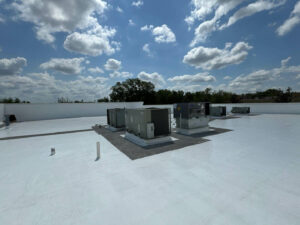
Reflective roof coatings are a game-changer for commercial buildings seeking to enhance their energy efficiency. When applied, these coatings reflect the sun’s rays, leading to a significant decrease in rooftop temperatures and subsequent energy use for cooling. Businesses should consult with professionals who specialize in commercial restoration to ensure a high-quality application that withstands the unique climate of Temple Terrace.
Optimizing Ventilation to Reduce Energy Costs
Proper roof ventilation goes hand-in-hand with reflective coatings to maximize energy savings. By facilitating the flow of air, ventilation systems help balance indoor and outdoor temperatures, reducing the workload on HVAC systems. Teams experienced with emergency dry-in can assess and improve roof ventilation, ensuring that your commercial space remains energy efficient and comfortable for occupants.