• Identify signs your commercial roof may lack wind resistance, such as missing shingles or water damage
• Step-by-step guide for strengthening your roof against high winds, including consultation and materials
• Common DIY mistakes to avoid and the importance of professional evaluations for optimal wind resistance
Spotting Vulnerabilities in Commercial Roofing
Your commercial roof is the frontline defense against the tumultuous winds of hurricane season in Lakeland, FL. Before delving into solutions, it’s crucial to know what signs of weakness to look out for. Missing shingles, a tell-tale sign, not only point to immediate damage but also hint at your roof’s compromised ability to withstand future wind events. Similarly, if your roofing material looks worn or is peeling up at the edges, this indicates that it’s time for a thorough inspection and potentially an upgrade.
Internal signs shouldn’t be ignored either. Frequently, issues like water stains on the ceilings or walls, especially after a storm, suggest a roof’s failing wind resistance. Alertness to these red flags means addressing subtle signs of damage before they escalate into major concerns. Furthermore, a visible sag in the roofing structure can point to structural integrity loss, an urgent situation that requires immediate expert attention to prevent potential hazards.
A periodical roof health checkup is non-negotiable, especially for roofs older than a decade. Age can significantly impact a roof’s resilience against forceful winds, as construction materials degrade over time. An assessment of past performance during high-wind scenarios will provide valuable insight into the necessary reinforcements needed. Understanding these problematic signs is your first step towards ensuring that your commercial roofing wind resistance is up to Lakeland’s seasonal challenges.
Professional Evaluation and Material Selection
After pinpointing potential issues, the next pivotal step is consulting a roofing specialist with a strong reputation in the Lakeland area. This expert will consider your roof’s history, conduct a thorough assessment and offer tailored solutions to amplify your roof’s resilience against winds. Together, you can explore options like high-grade materials and advanced fastening systems, ensuring your solutions are not just robust but also compliant with Florida’s stringent building codes. It’s a collaboration that combines professional acuity with your unique needs, paving the way for a fortified roofing system.
Choosing the right materials can be a game-changer in enhancing your commercial roof’s ability to face down fierce winds. Favorable choices such as metal panels or single-ply membranes bring a blend of durability and adaptability to the mix. To further explore your roofing options and find a perfect fit for your property, you can confidently rely on CES Commercial Roofing’s depth of services, including installation, maintenance, and restoration. Determining which materials exceed Lakeland’s required standards for wind uplift resistance is not just about security, it’s about making a long-term investment in your commercial asset.
Incorporating Design Features for Enhanced Protection
Building a wind-resistant commercial roof is not just about selecting tough materials; it also involves incorporating design features specifically tailored to withstand high winds. This includes reinforced edge flashing, a robust fastening system perhaps using ring-shank nails or threaded fasteners, and considering the addition of windbreaks. These design features play a crucial part in ensuring that each element of your roof can stand firm in the face of Mother Nature’s wrath. Such measures also serve to maintain the structural integrity of your roof and, by extension, your entire commercial property.
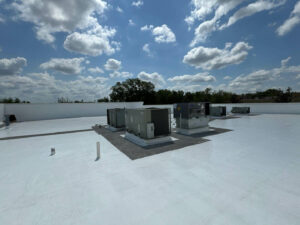
Moving beyond the materials and design, you need to eye every detail that comprises your rooftop’s landscape. The aim is to ensure every installation, from robust skylights to sprawling HVAC systems, is meticulously secured. For a comprehensive look at how CES Commercial Roofing can help protect these critical components, check out their emergency services. By doing so, you transform potential liabilities into fortified assets, all geared towards achieving optimal wind resistance.
Step 1: Assess Your Commercial Roof’s Current Wind Resistance
Begin by evaluating the current state of your commercial roof. Consider factors such as age, material, and past performance in windy conditions. This step sets the baseline for understanding potential upgrades.
Step 2: Consult with a Roofing Specialist
Schedule a consultation with a roofing professional specializing in commercial properties within Lakeland, FL. They can provide expert advice on enhancing your roof’s wind resistance, considering local building codes and weather patterns.
Step 3: Choose the Right Materials
Based on professional recommendations, select materials known for high wind resistance like metal panels, single-ply membranes, or modified bitumen. Ensure materials meet or exceed the local standards for wind uplift resistance.
Step 4: Incorporate Wind-Resistant Design Features
Upgrade your roofing system by including features like enhanced edge flashing, a stronger fastening system, and windbreaks where necessary. These design changes can significantly improve wind resilience.
Step 5: Secure Roofing Add-Ons
Inspect all rooftop installations such as HVAC units, signage, and skylights. Ensure they are properly secured to withstand high winds, as these can become liabilities during wind events.
Step 6: Regular Maintenance Checks
Implement a routine maintenance schedule to identify and address any issues that could compromise wind resistance, such as loose materials or water damage.
Step 7: Develop a Response Plan for Wind Events
Create an action plan that outlines steps to take when expecting high winds or a hurricane. This includes securing loose objects, clearing drains, and having a professional on call for emergency repairs.
Step 8: Stay Informed on Local Weather Patterns
Be proactive by monitoring Lakeland’s weather forecasts, especially during hurricane season. Staying informed helps you prepare and react swiftly to potential wind threats.
Avoiding Common DIY Rooftop Mistakes
While a proactive approach to commercial roof maintenance is commendable, it’s imperative to sidestep common DIY errors that can lead to more harm than good. These mistakes can negate your efforts to fortify your commercial property against wind damage. Let’s walk through some typical missteps and learn how to evade them for a commercial roofing wind resistance that’s truly effective.
Mistake 1: Neglecting a Professional Inspection
Many business owners might forgo a professional evaluation to save costs. However, failing to accurately assess the wind resistance of your commercial roof can lead to inadequate or incorrect enhancements. Always start by consulting with a trusted roofing specialist who can provide a detailed assessment.
Mistake 2: Choosing Materials Based on Cost Alone
While budget considerations cannot be ignored, prioritizing cost over quality when selecting roofing materials is a recipe for disaster. Inferior materials may not withstand Lakeland’s harsh wind conditions, leading to frequent repairs or replacements. Trust professional advice to select materials that offer a balance of cost-efficiency and wind resistance.
Mistake 3: Improper Installation of Roofing Add-Ons
Secure installation of add-ons like HVAC units and signage is crucial for roof integrity. Improperly secured installations can become windborne debris in a storm, causing extensive damage. Ensure that all rooftop elements are anchored according to the latest safety standards and best practices.
Mistake 4: Ignoring Local Building Codes
Disregarding the local building codes specific to Lakeland, FL, is not only dangerous but also illegal. These codes are designed to ensure that your roofing system can handle the local wind conditions. Understanding and adhering to these regulations is crucial for your roof’s compliance and safety.
Mistake 5: Inadequate Maintenance Routine
A ‘fix it when it breaks’ mentality can be detrimental to a commercial roof’s lifespan and wind resistance. Regular maintenance is essential to catch and correct small issues before they turn into significant problems, especially post-storm. Develop a regular routine and stick to it to maintain optimal roof performance.
Mistake 6: Overlooking the Importance of Weather Awareness
Being caught off-guard by a weather event can be avoided by staying informed about local weather patterns, particularly during hurricane season. Ignoring weather warnings can prevent timely preparations, putting your roof at unnecessary risk. Keep abreast of forecasts and have a solid response plan ready to go when needed.
Ongoing Maintenance for Sustained Wind Resistance
Long-term protection from wind necessitates a proactive approach to roof maintenance. Regular checks can identify minor issues before they escalate into significant vulnerabilities, especially when dealing with the impact of high winds. By engaging in scheduled maintenance, you ensure that your roofing’s wind resistance remains at peak performance, safeguarding your commercial investment.
Preparing for Wind Events and Unexpected Weather
Educating yourself on the specifics of wind-related weather patterns in Lakeland is vital for timely preventative actions. A comprehensive emergency response strategy should entail the proper securing of any loose items and ensuring clear drainage systems to combat heavy rains accompanying high winds. This strategic planning process, coupled with the expertise provided by CES Commercial Roofing in emergency dry-in services, builds a formidable defense against the unpredictable nature of hurricane season.