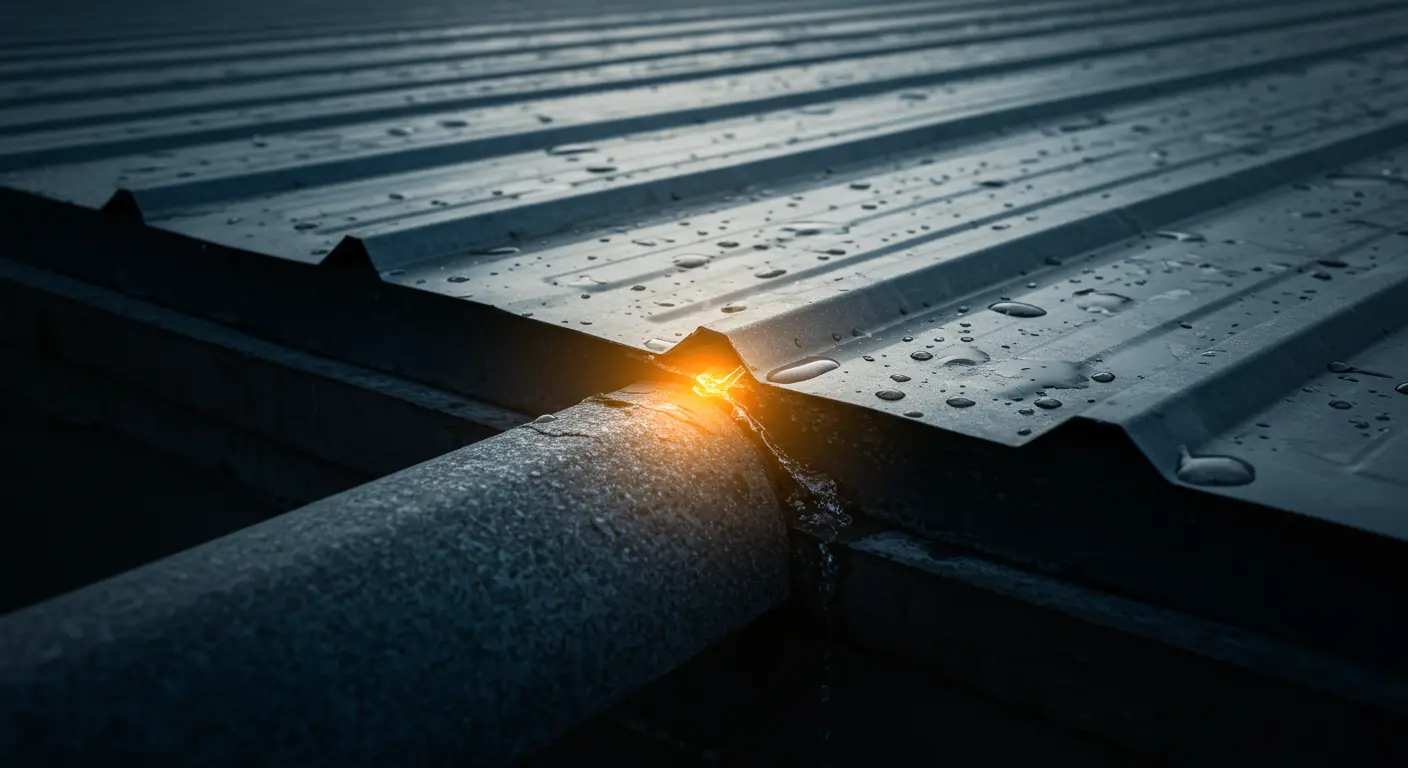
Water is relentless. A small roof leak in a commercial building can quietly compromise equipment, inventory and structural elements long before anyone sees a drip. For businesses in Tampa, FL or anywhere with a flat or low‑sloped roof, early leak detection is essential to avoid costly damage. This article explains how to recognise the signs of a leak, identifies common causes, reviews modern detection techniques and offers practical steps to minimise downtime.
Why Early Detection Matters
Commercial roofs are complex assemblies of membranes, insulation, flashing and drainage systems. When an intrusion occurs—through a puncture, a failed seam or a clogged drain—water follows gravity and may travel far from the entry point. By the time ceiling tiles are stained or puddles appear, water may have soaked insulation and rotted structural members. One contractor notes that persistent leaks not only damage inventory and equipment but can also compromise the building’s structural integrity and promote mould growth. The cost of emergency repairs is always higher than proactive maintenance; industry research cited by a building diagnostics firm suggests a poorly maintained roof can cost an extra US $200,000 over its service life.
Signs of a Commercial Roof Leak
Recognising a leak early can prevent substantial damage. Watch for the following signs in your facility:
| Sign | Description |
| Dripping and puddles | Obvious dripping from ceiling tiles or accumulated water on floors suggests water has penetrated the roofing system. |
| Mould and foul odours | Excess moisture promotes mould, which appears at corners or along walls and produces a musty smell. |
| Discoloration or sagging | Water accumulation can create brown or yellow stains on ceilings and cause sagging, indicating that pooled water may burst through. |
Other indications include peeling paint, bubbling plaster or increased humidity inside the building. Keep an eye on mechanical rooms—rooftop HVAC units or vent penetrations often leak.
Common Causes of Leaks in Commercial Roofs
Understanding why leaks occur helps you focus inspection efforts. Common causes include:
| Cause | Explanation |
| Damaged membranes and flashing | Cracks, holes, melting, peeling or punctures compromise waterproof membranes and flashing. Temperature fluctuations cause roofing materials to expand and contract, eventually breaking seals. |
| Improper installation | Poorly sealed seams or improperly installed penetrations allow water to seep through. |
| Harsh weather | Heavy rain, hail, snow and strong winds can cause cracks, tears or uplift. Freeze–thaw cycles lead to ponding and roof deterioration. |
| Clogged gutters/drains | Debris in gutters and internal drains prevents proper drainage, causing water to pond and eventually infiltrate. |
| Lack of routine maintenance or old age | Neglected roofs develop small issues that grow into leaks; as roofs approach the end of their service life, materials naturally degrade. |
Traditional Detection Methods
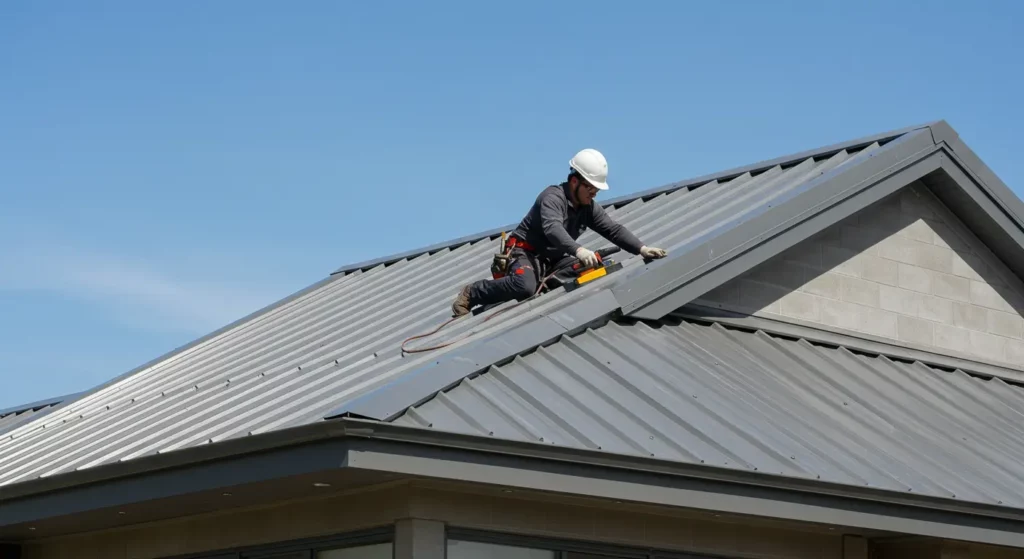
Visual Inspections and Client Interviews
Every investigation begins with a conversation and a visual sweep. Experienced inspectors at Register Roofing first listen carefully to building occupants to understand where and when leaks occur. They then survey the roof for obvious damage such as holes, punctures or deteriorated seams. Inspectors may probe suspect areas with a hooked screwdriver to find subtle membrane failures.
Water Testing
When visible inspection doesn’t locate the leak, a controlled water test can help. Contractors run water across sections of the roof and use a moisture meter inside the building to pinpoint leaks. The test often starts at the lowest point of the roof and works upward; water may need to remain on the roof for 30–60 minutes to confirm a leak. Approximately 80 % of leaks are solved through water testing. Technicians use two‑way radios to coordinate between the roof and interior during testing.
Infrared (Thermal) Surveys
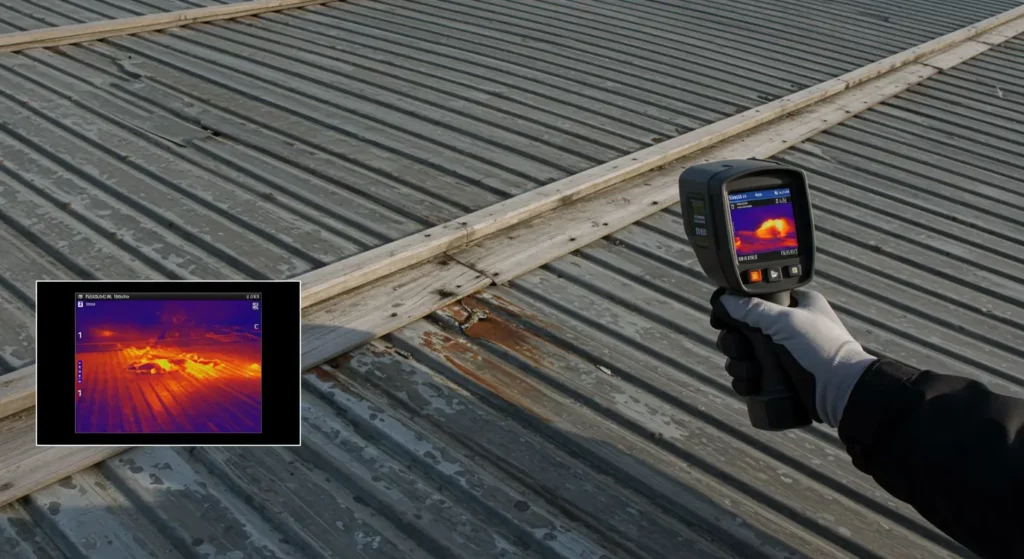
Infrared moisture surveys allow contractors to “see” beneath the roof membrane. During the day the sun warms the roof; wet areas with saturated insulation stay warmer than dry areas after sunset. At dusk, an inspector uses a thermal camera to capture images showing temperature differences; warm spots often correspond to wet insulation. Infrared surveys require a flat or low‑sloped roof, a clean dry surface and warm, sunny weather followed by a cool, clear evening. Benefits include identifying hidden moisture without cutting into the roof and quickly mapping the extent of wet insulation.
Non‑Destructive Testing (NDT)
Non‑destructive testing uses advanced tools to uncover subsurface problems without damaging the roof. A building diagnostics group explains that visual inspections often miss hidden leaks and moisture, whereas NDT reveals issues beneath the membrane. Methods include:
- Infrared thermography – described above, it detects temperature anomalies from moisture.
- Nuclear moisture surveys – these measure hydrogen ions (moisture) within insulation.
- Capacitance testing – by running an electrical signal through the roof, inspectors identify areas with higher capacitance (moisture).
NDT can be scheduled proactively during spring and fall transitions, after severe weather or during property transactions. A proactive testing schedule reduces long‑term repair costs and helps maintain warranties.
Moisture Mapping
Moisture mapping involves using specialized equipment to measure moisture distribution across the roof and underlying structures. By creating a moisture map, contractors can trace the path of infiltration and identify the true origin of leaks, which may be far from where water is visibly entering the building.
Electronic Leak Detection (ELD)
Recent advances include electronic leak detection, which uses an electrical current to locate breaches in waterproofing membranes. An Intertek article explains that ELD is a non‑destructive method that applies an electrical potential between the membrane and an underlying conductive substrate. When water bridges the membrane, current flows and reveals the location of the breach. ELD can be performed using low‑ or high‑voltage equipment on wet or dry surfaces and is suitable for roofs, plazas, parking decks, foundations and other applications.
Types of ELD systems include:
- Low‑Voltage Electric Field Vector Mapping (EFVM) – requires water on top of the membrane and a perimeter tracing wire; low‑voltage current flows through breaches.
- High‑Voltage “Brooms” – uses high‑voltage probes; no water or perimeter wire is needed. This method also measures membrane thickness.
- Low‑Voltage Horizontal and Vertical Scanning Platforms – deck scanners roll over surfaces, or sponges/rollers scan vertical walls to locate breaches.
ELD systems meeting ASTM standards (D7877‑14 and D8231‑19) are accurate, fast and versatile. They detect very small leaks and can be completed in hours instead of days.
Emergency Steps When You Find a Leak
If you discover a leak, follow these steps to minimize damage before repairs:
- Protect the interior – Place a bucket to collect water and remove sensitive equipment or furniture from the area.
- Document the entry point – Record the leak’s location for insurance and for the contractor.
- Inspect for additional issues – Look for mold, sagging or discoloration near the leak.
- Contact a roofing contractor – Arrange for emergency repairs and call your insurance company.
Temporary measures such as tarps or sealant can limit water intrusion, but professional repairs are essential.
Preventative Maintenance and Leak Prevention
Preventative maintenance is the most cost‑effective way to avoid leaks. Key strategies include:
- Regular inspections – Walk the roof once a month to check for obvious damage or debris; prune tree limbs away from the roof. Experts recommend professional maintenance at least twice a year, particularly before and after harsh weather.
- Seasonal checklists – Use seasonal inspection checklists to focus on issues such as debris removal in spring and fall, ice dam prevention in winter, and UV damage in summer.
- Drainage and waterproofing – Ensure gutters and roof drains are clear and functioning. Consider tapered insulation or extra drains on flat roofs to prevent ponding. Upgrade to high‑performance membranes or coatings for better waterproofing.
- Proactive non‑destructive testing – Schedule infrared surveys or electronic leak detection as part of a maintenance plan to identify hidden moisture before it causes leaks.
- Choose qualified contractors – Select unbiased, certified testing providers with experience in commercial roofing. Look for certifications from recognized bodies like the American Society for Nondestructive Testing (ASNT) and demand clear, actionable reports.
Roof leaks in commercial buildings pose serious risks, but they can be managed through awareness, modern detection methods and proactive maintenance. Watch for early signs such as dripping, mold and ceiling discoloration; understand common causes like damaged membranes, improper installation and poor drainage; and use a combination of visual inspections, water tests, thermal imaging, moisture mapping and electronic leak detection to uncover hidden problems. When a leak occurs, act quickly to protect the interior and engage professionals for repairs. Above all, invest in regular inspections and non‑destructive testing. A structured maintenance program will extend the life of your commercial roof, protect your business assets and keep your building—and its occupants—safe.