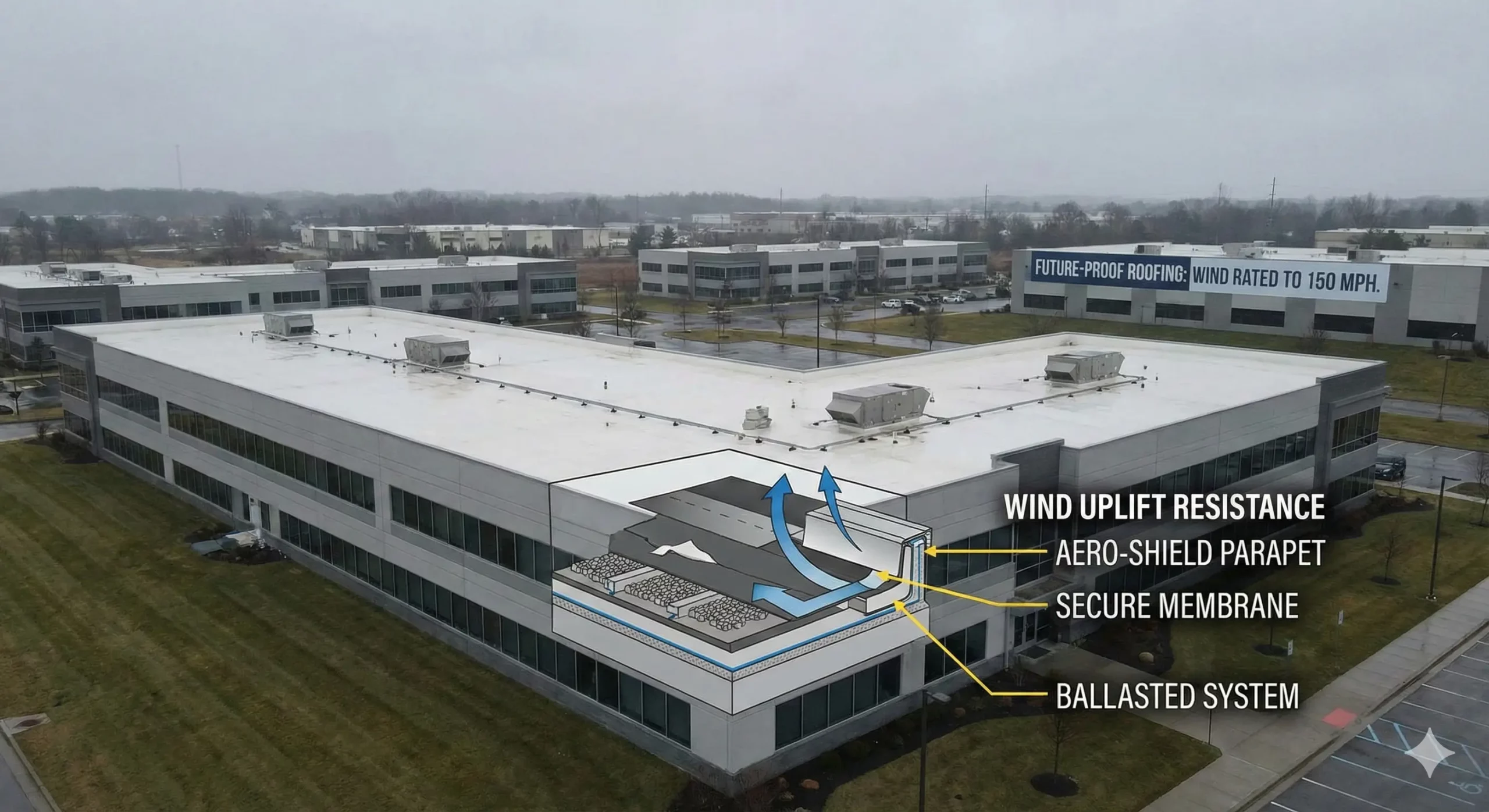
Every year, commercial property owners across the United States face millions of dollars in wind-related roof damage. For businesses in hurricane-prone regions like Florida, selecting the right wind-resistant roofing material isn’t just smart planning—it’s essential for protecting your investment and operations.
This guide explains the key wind-resistant roofing materials available for commercial buildings, how to understand wind ratings and certifications, and what factors matter most when choosing a roof system built to withstand severe weather.
What Makes a Commercial Roof Wind-Resistant?
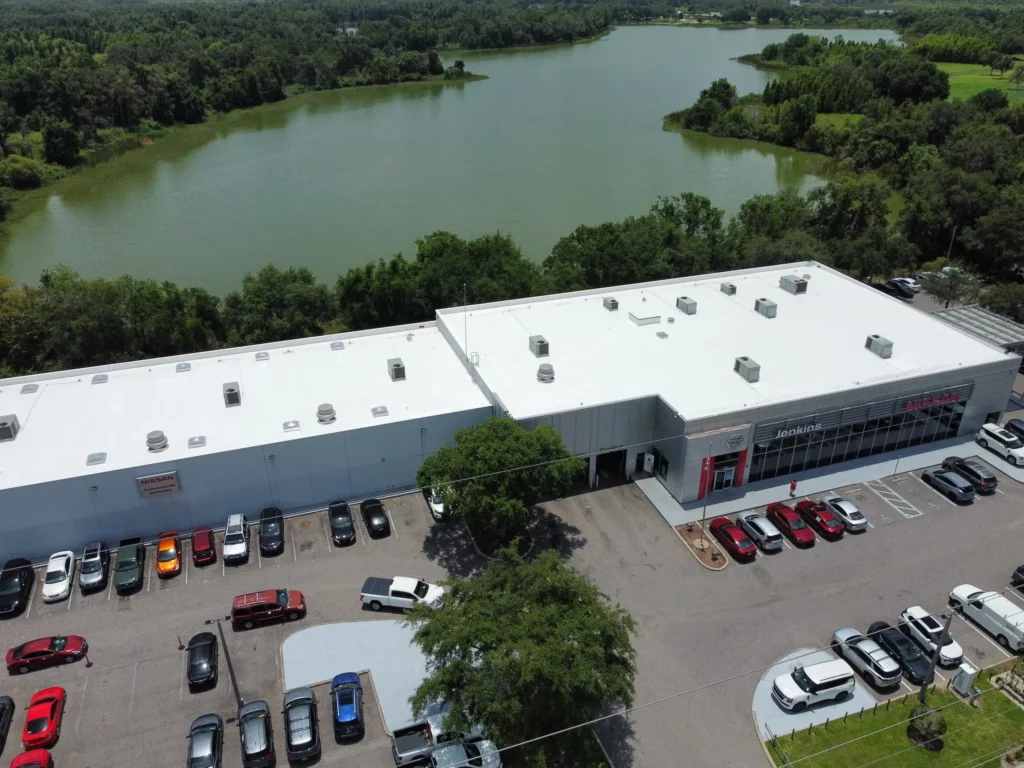
A commercial roof’s wind resistance depends on three primary factors: the roofing material itself, the installation method, and the attachment system used to secure it to the building structure.
Wind doesn’t simply push against a roof. It creates uplift pressure—a suction effect that tries to pull roofing materials away from the deck. This pressure is strongest at roof corners and edges, where wind speeds accelerate as air flows over the building.
According to FM Approvals, a leading third-party testing organization for commercial roofing, wind uplift failures account for the vast majority of business losses during windstorms. Their decade-long analysis found that approximately 80% of wind-related property losses stemmed from inadequate roof wind resistance.
Understanding Wind Resistance Ratings and Standards
Commercial roofing materials are tested and rated by several organizations. Understanding these ratings helps you compare products and ensure code compliance.
FM Approvals Ratings
FM Approvals tests complete roof assemblies—not just individual materials. Their wind uplift ratings range from 1-60 to 1-990, indicating the pounds per square foot (psf) of uplift pressure the system can withstand.
Common FM ratings for commercial roofs include:
- FM 1-60: Basic wind zones, suitable for sheltered locations
- FM 1-90: Standard requirement for most commercial buildings
- FM 1-120: Required for high-wind or coastal environments
- FM 1-150 and higher: Needed for tall buildings or extreme wind zones
UL and ASTM Standards
Underwriters Laboratories (UL) provides additional wind resistance certifications:
- UL 580: Rates roof assemblies as Class 15, 30, 60, or 90 based on uplift resistance
- UL 1897: Measures extended wind uplift performance under sustained pressure
- UL 2218: Tests impact resistance from hail and debris (Class 1-4, with Class 4 being highest)
ASTM International sets testing standards including ASTM D7158, which assigns H, G, or D classifications based on uplift resistance, with Class H representing the highest protection level.
Which Commercial Roofing Materials Offer the Best Wind Resistance?
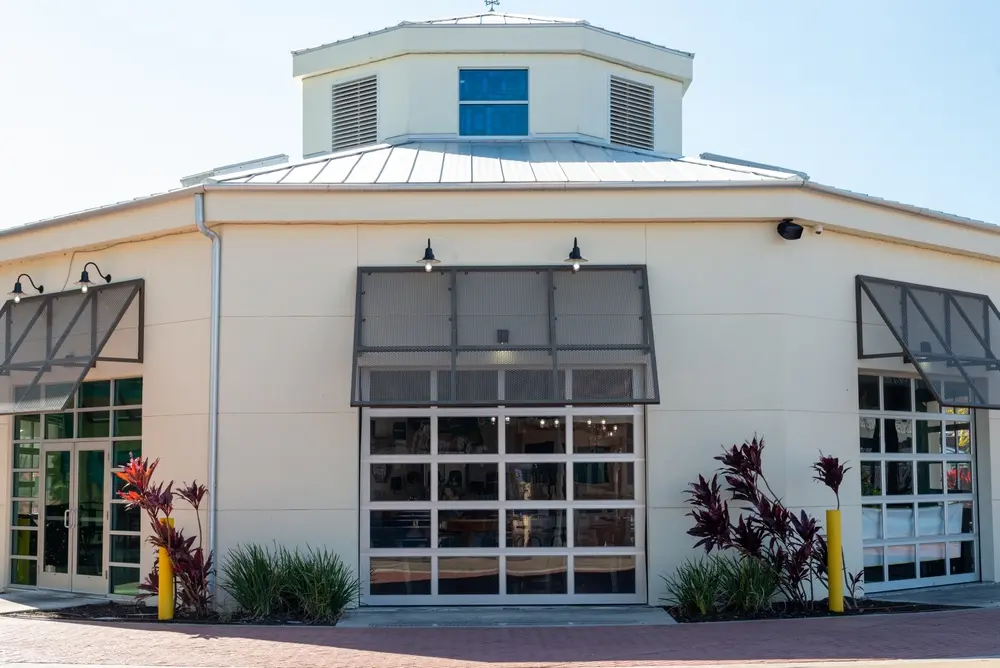
Different roofing materials offer varying levels of wind protection. Here’s how the most common commercial roofing systems compare.
Standing Seam Metal Roofing
Standing seam metal roofs consistently rank among the most wind-resistant options for commercial buildings. Properly designed and installed metal roofing systems can withstand wind speeds of 140 mph or higher. Some specialized systems engineered for hurricane zones resist winds exceeding 180 mph.
Key advantages of metal roofing for wind resistance:
- Interlocking panel design prevents wind infiltration
- Concealed fasteners eliminate weak points
- Lightweight material reduces structural stress
- Can be enhanced with external seam clamps for additional protection
The National Roofing Contractors Association (NRCA) notes that external wind clamps can substantially increase a standing seam roof’s uplift resistance when properly fitted and installed.
PVC (Polyvinyl Chloride) Membrane Roofing
PVC roofing membranes are popular for commercial flat roofs and offer excellent wind resistance, typically rated for 120-150 mph winds. Their heat-welded seams create a continuous, watertight bond that prevents seam failure under wind pressure.
PVC membranes perform well because:
- Heat-welded seams are stronger than the membrane itself
- Membranes can be fully adhered or mechanically attached
- The material resists tearing and punctures
- White reflective surfaces reduce thermal stress
For maximum wind protection, PVC systems require proper edge reinforcement and perimeter enhancements.
TPO (Thermoplastic Polyolefin) Roofing
TPO roofing has become one of the most widely installed commercial roofing materials. Its wind resistance depends heavily on the attachment method, with mechanically attached systems typically achieving 60-90 psf ratings and fully adhered systems reaching higher ratings.
TPO offers:
- Heat-welded seams similar to PVC
- Flexibility in installation methods
- Cost-effective wind protection for many applications
- Strong resistance to punctures and tears
Modified Bitumen Roofing
Modified bitumen systems provide solid wind resistance ranging from 90-150 mph, depending on installation. The attachment method significantly impacts performance—torch-applied or hot-mopped systems with continuous adhesion offer superior wind resistance compared to cold-applied options.
Modified bitumen works well because:
- Multi-layer construction adds strength
- The material is naturally resistant to tearing
- Fully adhered systems eliminate wind infiltration points
- Self-healing properties help with minor damage
EPDM (Ethylene Propylene Diene Monomer) Roofing
EPDM rubber roofing has been a commercial roofing staple for decades. Wind resistance varies widely based on whether the system is ballasted, mechanically attached, or fully adhered.
Fully adhered EPDM systems offer the best wind performance, while ballasted systems are limited in high-wind areas since loose gravel or pavers can become projectiles during severe storms.
How Does Installation Method Affect Wind Resistance?
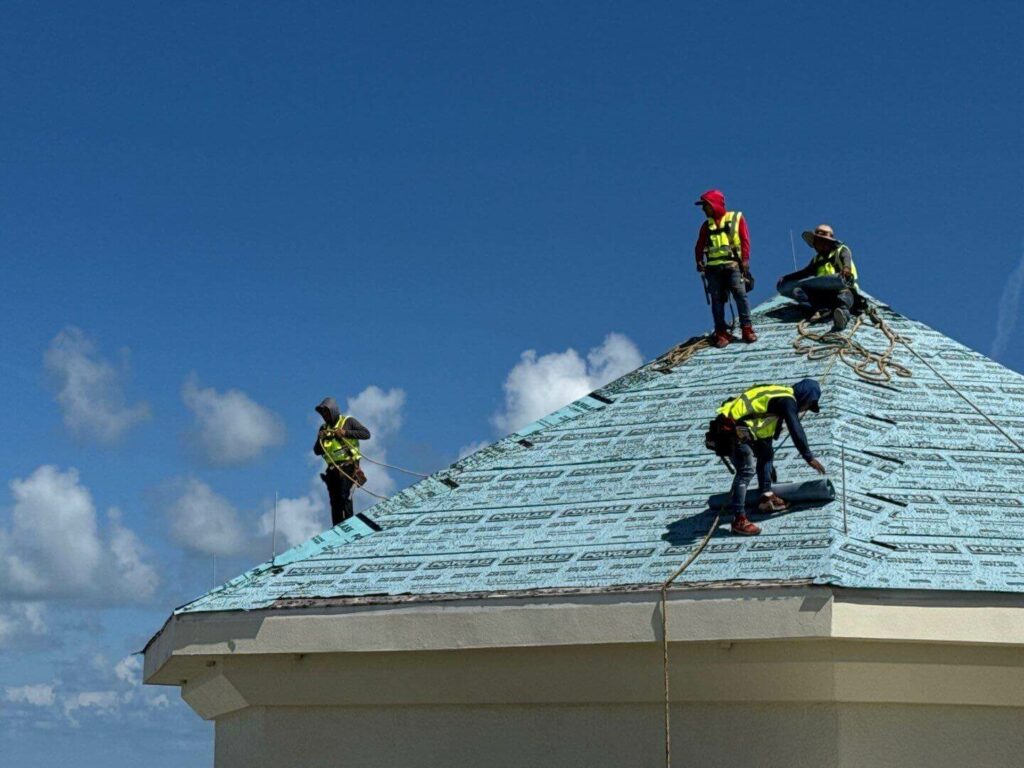
The same roofing material can have dramatically different wind ratings depending on how it’s installed. There are three primary attachment methods for commercial roofing.
Fully Adhered Systems
Fully adhered roofing systems use adhesives to bond the entire membrane to the substrate. This creates a continuous connection that distributes wind loads across the entire roof surface. Fully adhered systems generally provide the highest wind resistance but require proper substrate preparation.
Mechanically Attached Systems
Mechanical attachment uses fasteners and plates to secure the membrane at regular intervals. Wind resistance depends on fastener spacing, with closer spacing providing higher ratings. These systems are cost-effective but require careful engineering to meet wind load requirements.
Ballasted Systems
Ballasted systems hold the membrane in place with gravel, pavers, or other heavy materials. They’re not recommended for high-wind areas because building codes often restrict their use where wind speeds exceed certain thresholds.
What Should Florida Property Owners Consider?
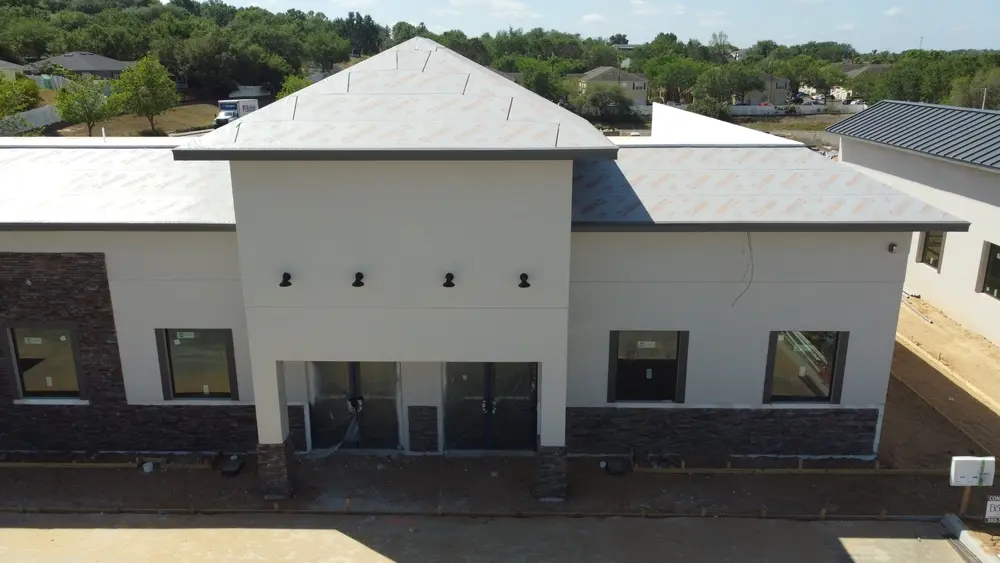
Commercial buildings in Florida face unique wind challenges due to hurricane exposure. The Florida Building Code requires roofing systems to meet specific wind resistance standards based on location and building characteristics.
High-Velocity Hurricane Zones (HVHZs), including Miami-Dade County, require the most stringent roofing standards in the nation. Products used in these areas must achieve TAS-125 certification, demonstrating they can withstand hurricane-force winds and wind-driven rain.
For Florida commercial properties, key considerations include:
- Wind speed requirements: Most areas require systems rated for 120-140 mph or higher
- Miami-Dade certification: Products must meet Notice of Acceptance (NOA) requirements
- Impact resistance: Roofs should resist wind-borne debris damage
- Secondary water barriers: Required to prevent water intrusion if the primary roof is breached
Working with an experienced commercial roofing contractor ensures your roof system meets all applicable Florida codes and provides genuine protection during hurricane season.
Quick Facts: Wind-Resistant Commercial Roofing
- Metal roofing can withstand winds up to 180 mph with proper engineering
- FM 1-90 is the baseline rating for most commercial buildings
- Roof edges and corners experience the highest wind uplift pressure
- Heat-welded seams on PVC and TPO create bonds stronger than the membrane material
- Fully adhered systems generally outperform mechanically attached systems in extreme wind
- Buildings over 60 feet tall typically require FM 1-105 or higher ratings
- ASTM D7158 Class H represents the highest shingle wind resistance classification
How to Choose the Right Wind-Resistant Roof
Selecting the best wind-resistant roofing material for your commercial building requires evaluating several factors:
- Local wind speed requirements: Check building code requirements for your specific location
- Building height and exposure: Taller buildings and those in open areas need higher ratings
- Budget considerations: Weigh upfront costs against long-term protection and insurance benefits
- Maintenance capabilities: Some systems require more upkeep to maintain wind resistance
- Insurance requirements: Verify what your insurer requires for coverage
Professional wind load calculations should be performed for every commercial roofing project. This analysis considers your building’s specific dimensions, location, and exposure to determine the exact wind resistance rating required.
Protect Your Commercial Property with Wind-Resistant Roofing
Choosing the right wind-resistant roofing material is one of the most important decisions you’ll make for your commercial property. The consequences of inadequate wind protection—roof failure, water damage, business interruption—far outweigh the cost of installing a properly rated system from the start.
Whether you need a new roof installation or want to assess your existing roof’s wind resistance, CES Roofing provides expert guidance for commercial properties throughout Florida. Our team understands local building codes, hurricane requirements, and the roofing systems that truly perform when severe weather strikes. Contact us today for a professional assessment of your commercial roofing needs.