


• Understanding the Basics: Learn what waterproofing systems are and why they’re crucial for protecting commercial roofs from water damage.
• Step-by-Step Guide: Follow a detailed walkthrough on how to implement waterproofing systems, including material selection and application techniques.
• Expert Installation: Discover the benefits of hiring professionals for waterproofing your commercial roof to ensure longevity and compliance with standards.
Recognizing Red Flags on Your Commercial Rooftop
When it comes to maintaining a robust commercial building, the significance of the roof’s integrity cannot be overstated. Especially in Wesley Chapel, FL, where the climate can present unique challenges, early detection of any wear and tear is vital. Be on guard for visible cracks or separations on the roofing membrane, as these can be gateways for water ingress. Equally concerning are signs of aging such as blisters or bubbles in the roofing material, which often indicate trapped moisture or air that can compromise roof stability.
While aesthetics aren’t everything, the appearance of your rooftop can speak volumes about its condition. Discoloration or streaking patterns may suggest water pooling, a precursor to more serious waterproofing issues. It’s essential to pay attention to the state of the flashings and seals, for they are common points of failure. If they are pulled away or visibly deteriorated, it’s time to take immediate action to prevent potentially costly damage.
Finally, don’t overlook the importance of a thorough documentation process. Mapping out problem areas provides a clear plan for remediation and streamlines communication with any service professionals you may engage with for repairs. Whether you’re standing on the roof or reviewing aerial imagery, ensure every section is scrutinized with the future health of your waterproofing systems for commercial roofs in mind. Appropriate documentation is not just a record; it’s a powerful tool in diagnosing and rectifying roofing woes before they escalate.
Choosing the Appropriate Waterproofing Material
Selecting the right waterproofing solution is not just a matter of preference; it’s a strategic decision that can safeguard your property from the unpredictable weather in Wesley Chapel, FL. The array of materials available, from advanced liquid-applied membranes to traditional bituminous coatings, each offers distinct advantages depending on your specific needs. When making this choice, consider factors like the roof’s slope, the existing roofing system, and even the local climate’s demands. This careful consideration is crucial in ensuring the waterproofing system you select can withstand the rigors of the environment and provide long-lasting protection.
In today’s market, innovations in waterproofing technology offer enhanced durability, application efficiency, and environmental sustainability. Reflective coatings, for instance, can not only prevent water infiltration but also offer the added benefit of energy savings by deflecting sunlight. It’s imperative to consult a professional to assess the current state of your roofing system and guide you towards the best material choice. By combining expert advice with quality materials, you can achieve an optimally protected commercial roof ready to face Wesley Chapel’s rainy season head-on.
Step 1: Assess Your Commercial Roof’s Current State
Begin by examining the existing condition of your commercial roof. Look for any signs of damage or wear, such as cracks, blistering, or pooling water. Document any areas that need attention to determine the specific waterproofing requirements.
Step 2: Choose the Right Waterproofing Material
Research and select waterproofing materials that are suitable for your roof type and climate in Wesley Chapel, FL. Common options include liquid-applied membranes, bituminous coatings, and polyurethane sealants.
Step 3: Prepare the Roof Surface
Ensure the roof surface is clean, dry, and free of debris. Repair any cracks or damages to the roof substrate. Proper preparation is essential for the waterproofing material to bond effectively and provide a long-lasting solution.
Step 4: Apply the Primer (if required)
Some waterproofing systems require a primer to improve adhesion. If the chosen material requires it, apply the primer as directed by the manufacturer’s guidelines.
Step 5: Install the Waterproofing System
Carefully apply the waterproofing material to your commercial roof, following the manufacturer’s instructions. Pay close attention to edges, corners, and any protrusions, ensuring complete coverage without gaps.
Step 6: Ensure Proper Sealing around Fixtures
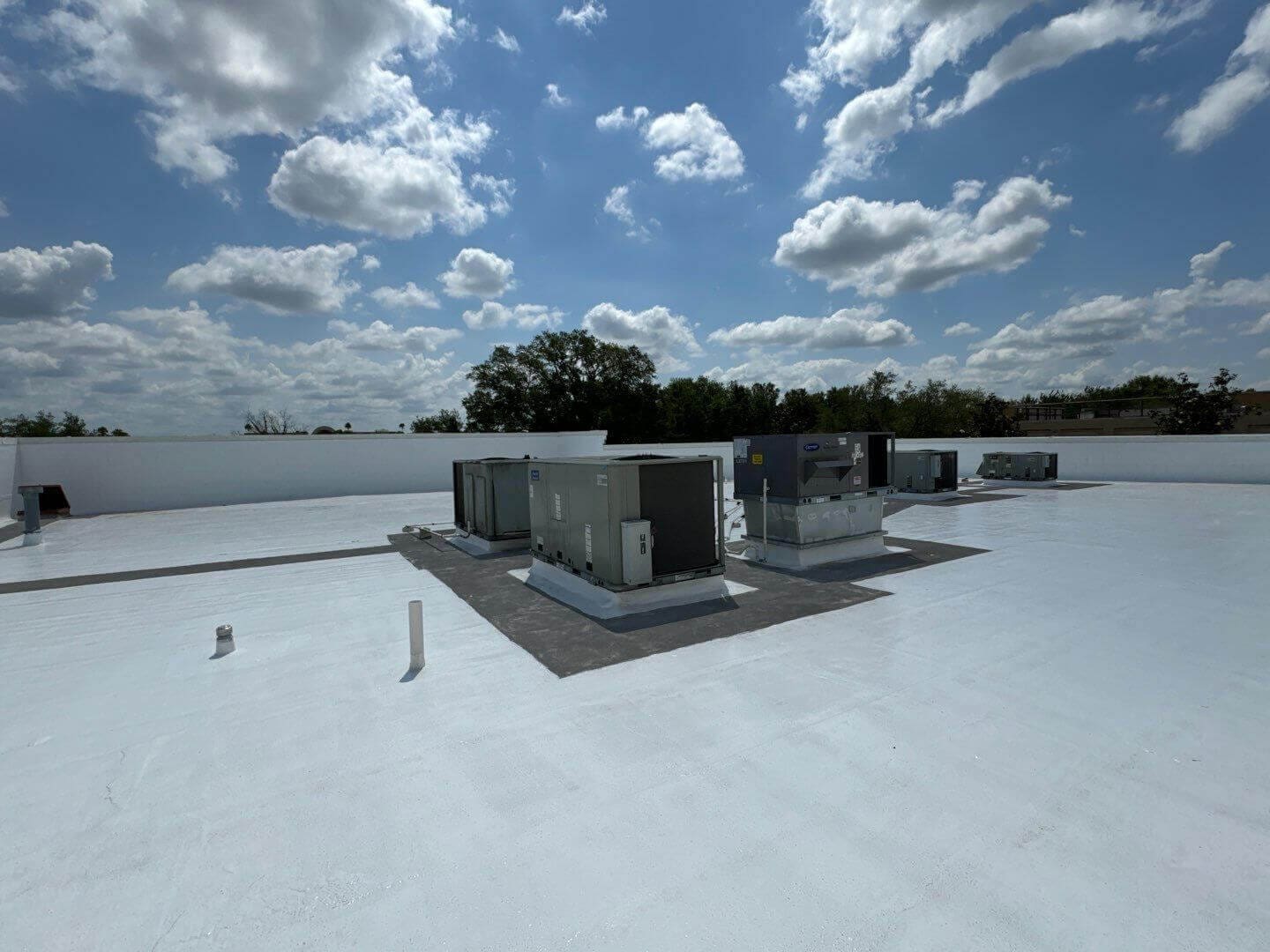
Waterproofing is not just about the surface; it’s also critical to seal around skylights, vents, and HVAC units. Use sealants and flashing techniques to create a watertight barrier around these fixtures.
Step 7: Inspect and Touch Up
After the application, inspect the entire surface for any missed spots or thin areas. Apply additional material where necessary to ensure a consistent and complete waterproofing layer.
Step 8: Schedule Regular Maintenance
To extend the life of your waterproofing system, schedule regular inspections and maintenance. This will help identify any potential issues early and keep the waterproofing system for commercial roofs in optimal condition, especially before the rainy fall season in Wesley Chapel, FL.
Introduction: Common Waterproofing Pitfalls and How to Avoid Them
DIY waterproofing can seem like a cost-effective solution, but without professional knowledge, it’s easy to fall into traps that can compromise your commercial roof’s integrity. Understanding these common mistakes is essential to protect your investment and ensure a successful waterproofing project. Let’s explore some of the frequent missteps property owners make and how to avoid them, aligning our approach with the key steps for effective waterproofing.
Common Mistakes to Avoid During DIY Waterproofing
Mistake 1: Ignoring Early Signs of Damage
Many property owners overlook subtle indicators of wear, such as small cracks or minor blistering, only to find that these issues have compounded into major problems. Avoid this error by conducting regular inspections and addressing any concerns early on to prevent moisture from threatening the roof’s structure.
Mistake 2: Choosing Materials Based Solely on Price
While budget is a valid concern, skimping on quality can lead to repeated repairs and decreased roof longevity. Research waterproofing materials thoroughly, considering factors like longevity, compatibility with your existing roof, and suitability for Wesley Chapel’s climate to make a well-informed decision.
Mistake 3: Inadequate Surface Preparation
A clean, dry, and debris-free surface is critical for adhesion and the effectiveness of your waterproofing system. Failing to prepare the roof properly can result in peeling and ineffective waterproofing, so take the time to repair any existing issues before applying any materials.
Mistake 4: Applying Materials Incorrectly
Each waterproofing material has specific application methods that must be followed for optimal performance. Incorrect application can lead to gaps in coverage or a breached waterproofing layer, so follow the manufacturer’s instructions meticulously, especially when it comes to applying primers and ensuring edge-to-edge coverage.
Mistake 5: Neglecting Detailed Sealing Around Roof Features
Features like vents and skylights require careful attention to ensure they are integrated properly into the waterproofing system. Failing to seal these areas adequately can create pathways for water entry, undermining your waterproofing efforts.
Mistake 6: Overlooking Post-Application Inspection
After installing your waterproofing system, a thorough inspection is needed to identify any missed areas or potential weaknesses. Make sure to touch up these spots to maintain consistent protection, as even small imperfections can lead to leaks and water damage.
Mistake 7: Not Maintaining Your Roof Post-Waterproofing
Regular maintenance is vital to prolong the efficacy of your waterproofing system. By scheduling routine checks, especially in anticipation of Wesley Chapel’s rainy fall season, you can catch and resolve issues before they escalate, ensuring your waterproofing efforts stand the test of time.
Preparation: The Key to Effective Waterproofing
A successful waterproofing endeavor begins long before the actual application of materials. The roof must be in prime condition to ensure the longevity of the waterproofing system. Residual moisture, debris, and old roofing materials need to be cleared away, which might necessitate a thorough power wash or even more extensive preparatory measures.
To avoid the risk of a failed waterproofing system, any signs of damage or weakness must be addressed promptly. Repairing any structural impairments, such as reinforcing compromised insulation or mending minor punctures, is a necessary precursor to any waterproofing process. Engaging with professional maintenance and repair services can ensure that your commercial roof is in optimal condition for waterproofing application.
Priming and Sealing: Establishing a Waterproof Foundation
For certain waterproofing systems, a primer can serve as an essential layer that promotes stronger adhesion of the main waterproofing element. The role of a primer should not be underestimated; it can drastically enhance the effectiveness of the waterproofing application. Following the manufacturer’s directions for primer application ensures that the waterproofing materials will form a secure and enduring bond with your commercial roof.
Attention to detail is critical when it is time to seal around protrusions such as vents, pipes, and HVAC equipment. These areas are vulnerable and require extra care to ensure they are not sources of future leaks. To prevent potential issues, consider collaborating with specialists in commercial roofing installation who can expertly navigate these complexities and guarantee a comprehensive waterproof seal.
Our team is ready to assist with inspections, repairs, and full commercial roof projects. Contact us today to get started!