

Strong winds pose one of the greatest threats to commercial buildings. A single storm can tear roofing materials away, expose your structure to water damage, and halt business operations for weeks. Choosing the best roof for windy areas is not just about durability—it’s about protecting your investment, your employees, and your bottom line.
This guide covers everything commercial property owners need to know about wind-resistant roofing. You’ll learn which materials perform best, how to interpret wind ratings, and what installation practices make the difference between a roof that survives and one that fails.
What Makes a Commercial Roof Wind-Resistant?
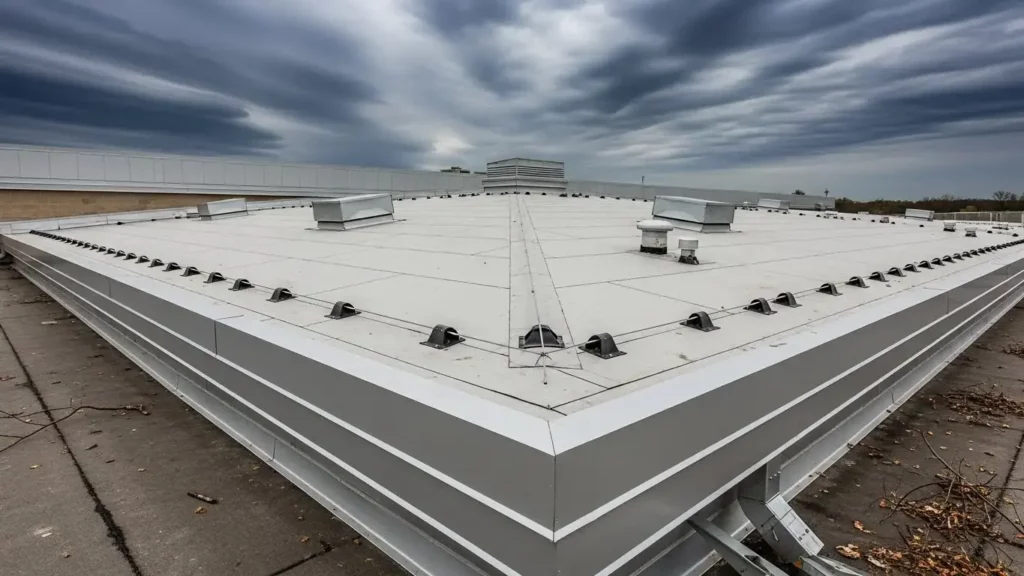
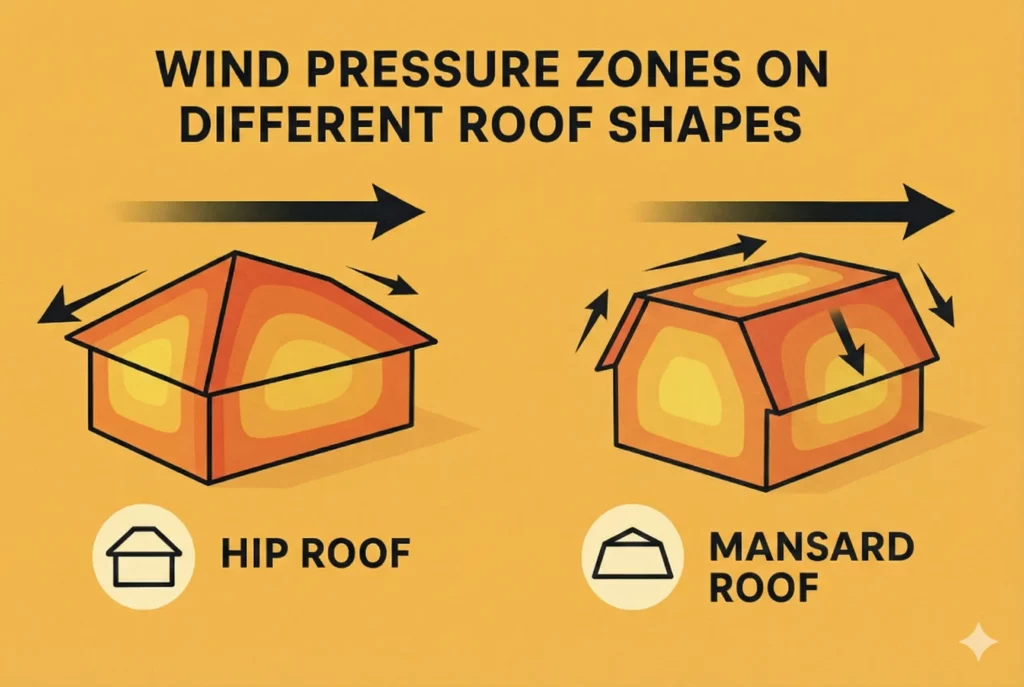
Wind-resistant commercial roofing relies on three critical factors: material strength, attachment method, and proper installation. When wind flows over a building, it creates negative pressure (suction) on the roof surface. This uplift force tries to pull roofing materials away from the structure, starting at vulnerable edges and corners.
The strongest wind-resistant roofs share these characteristics:
- Heat-welded or mechanically fastened seams that won’t separate under stress
- Secure attachment to the roof deck with appropriate fastener spacing
- Reinforced perimeter and corner zones where wind forces are strongest
- Continuous load paths that transfer wind forces down through the building structure
According to FEMA’s Hurricane and Flood Mitigation Handbook, roof coverings must be designed to meet local wind requirements, with special attention to perimeter and corner areas where uplift pressures can be 2-3 times higher than in the field of the roof.
How Are Wind Ratings Measured?

Wind uplift ratings tell you how much pressure a roof system can withstand before failure. FM Global, a leading commercial property insurer, uses a classification system expressed as FM 1-60, FM 1-90, FM 1-120, and higher. The second number indicates resistance in pounds per square foot (PSF).
Quick Facts: FM Global Wind Ratings
- FM 1-60: Suitable for basic wind zones (up to 60 PSF)
- FM 1-90: Common for most commercial properties in moderate wind areas
- FM 1-120 and higher: Required for high-wind and coastal environments
UL 580 is another widely recognized testing standard that rates roof assemblies as Class 15, 30, 60, or 90 based on their uplift resistance during standardized pressure tests.
Your required wind rating depends on your building’s location, height, exposure category, and the terrain surrounding the structure. Buildings in coastal areas, hurricane zones, or elevated locations typically need higher ratings than those in protected inland areas.
What Are the Best Roofing Materials for High-Wind Areas?
Standing Seam Metal Roofing
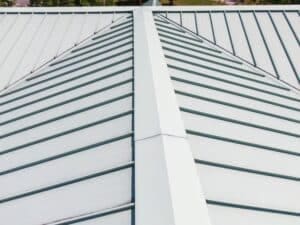
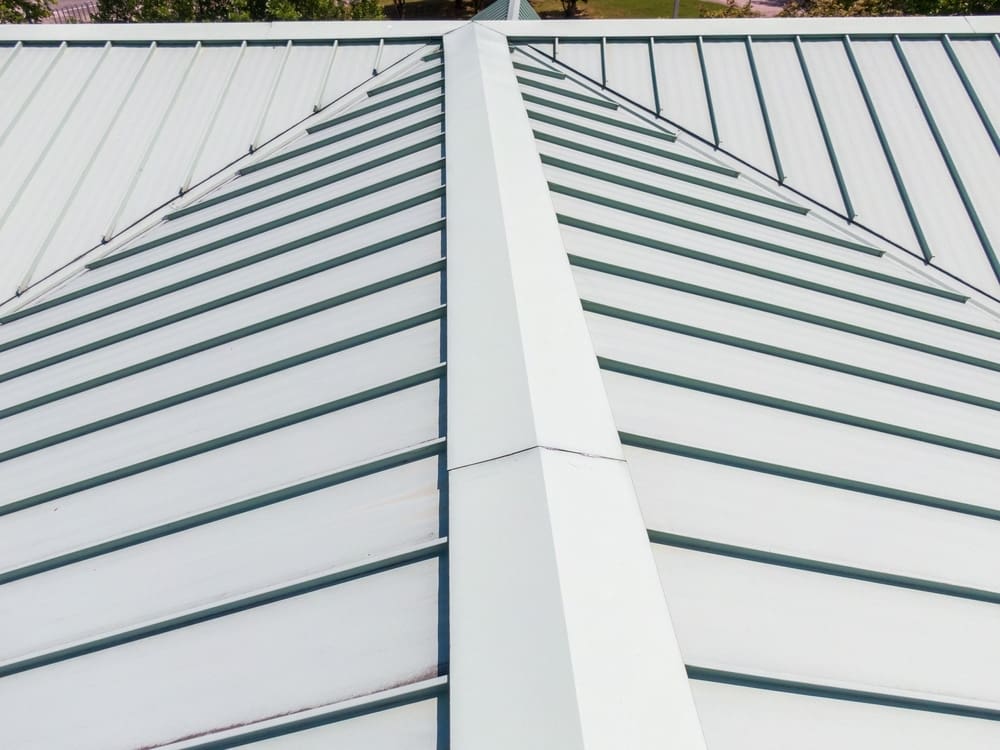
Standing seam metal roofing is often considered the gold standard for wind resistance in commercial applications. According to industry data, metal roofs account for approximately 33 percent of all new low-rise nonresidential roofs installed annually.
Why standing seam excels in high winds:
- Mechanically seamed panels interlock to create continuous, wind-resistant connections
- Concealed clips allow thermal movement without compromising attachment
- Can be engineered to withstand extreme uplift forces, often exceeding 150 PSF
- Double-lock seams provide the most weatherproof and strongest seam configuration available
FEMA’s Recovery Advisory on Metal Roof Systems notes that properly designed structural standing seam systems survived Hurricane Andrew in Florida, where estimated wind speeds reached 170 mph. The key is proper engineering, with clip spacing often reduced to 18 inches or less in high-wind zones compared to 24 inches in standard applications.
TPO Roofing (Thermoplastic Polyolefin)
TPO has become the market leader in low-slope commercial roofing, capturing approximately 40 percent of new construction installations. Its heat-welded seams create bonds stronger than the membrane itself, making it highly resistant to wind peeling.
TPO advantages for windy areas include:
- Seams welded at 900°F+ create monolithic waterproof surfaces
- Available in 45, 60, and 80-mil thicknesses for varying durability needs
- Excellent resistance to UV radiation and punctures from wind-borne debris
- White reflective surface reduces thermal stress on the building
For maximum wind performance, TPO should be fully adhered or mechanically fastened with increased fastener density at perimeters and corners.
PVC Roofing (Polyvinyl Chloride)
PVC membranes offer some of the highest fire and wind ratings among single-ply roofing materials. Like TPO, PVC uses heat-welded seams that perform exceptionally well under wind stress.
PVC stands out because of:
- Superior chemical resistance for buildings near industrial operations
- Excellent dimensional stability that resists shrinkage over time
- Strong track record in high-wind coastal applications
- Heat-welded seams that maintain integrity for decades
Modified Bitumen
Modified bitumen roofing combines the proven performance of built-up roofing with modern polymer technology. When properly installed with torch-applied or hot-mopped application methods, modified bitumen creates a fully adhered membrane with excellent wind resistance.
This material works well in high-wind areas because:
- Multiple-ply construction adds redundancy
- Fully adhered systems resist uplift across the entire roof surface
- Granulated cap sheets resist damage from wind-borne debris
- Self-healing properties in some formulations seal minor punctures
EPDM Roofing (Ethylene Propylene Diene Monomer)
EPDM has been a reliable commercial roofing choice since the 1960s. While its adhesive-applied seams are not as strong as heat-welded alternatives, EPDM’s exceptional flexibility allows it to accommodate building movement without cracking.
EPDM considerations for wind resistance:
- Outstanding elasticity (can stretch up to 300 percent) absorbs stress from wind gusts
- Excellent resistance to UV radiation and ozone degradation
- Best performance when fully adhered rather than ballasted in high-wind zones
- Requires careful seam inspection and maintenance to ensure long-term wind integrity
How Does Proper Installation Affect Wind Performance?
Even the best roofing materials will fail in high winds if improperly installed. According to the National Roofing Contractors Association (NRCA), installation quality is the most critical factor in roof wind performance.
Key Installation Practices for Wind Resistance
Fastener Spacing and Placement
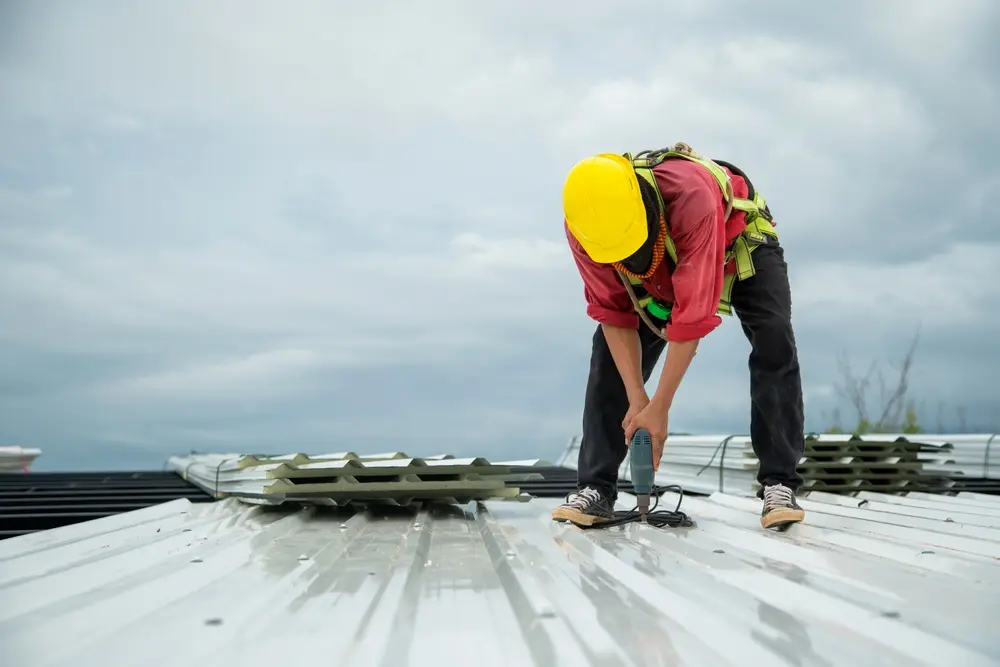
In standard roof areas (the field), fasteners may be spaced 12-24 inches apart depending on the system. However, corner zones typically require fasteners at 6-inch spacing or closer, while perimeter zones need intermediate spacing. Missing or misaligned fasteners are a leading cause of wind-related roof failures.
Edge and Perimeter Securement
Roof edges experience the highest wind loads because wind accelerates as it wraps around building corners. Metal edge securement must be designed and tested according to ANSI/SPRI ES-1 standards to prevent blow-off.
Roof-to-Wall Connections
Continuous load paths must transfer wind forces from the roof covering through the deck, to the structural framing, and down to the foundation. Hurricane straps, clips, and proper fastening to structural members prevent the roof system from separating from the building.
Quality Control During Installation
FM Global recommends visual construction observation throughout roof installation on insured buildings. This ensures materials match approved specifications and workmanship meets design requirements.
What Are Florida Building Code Requirements for High-Wind Zones?
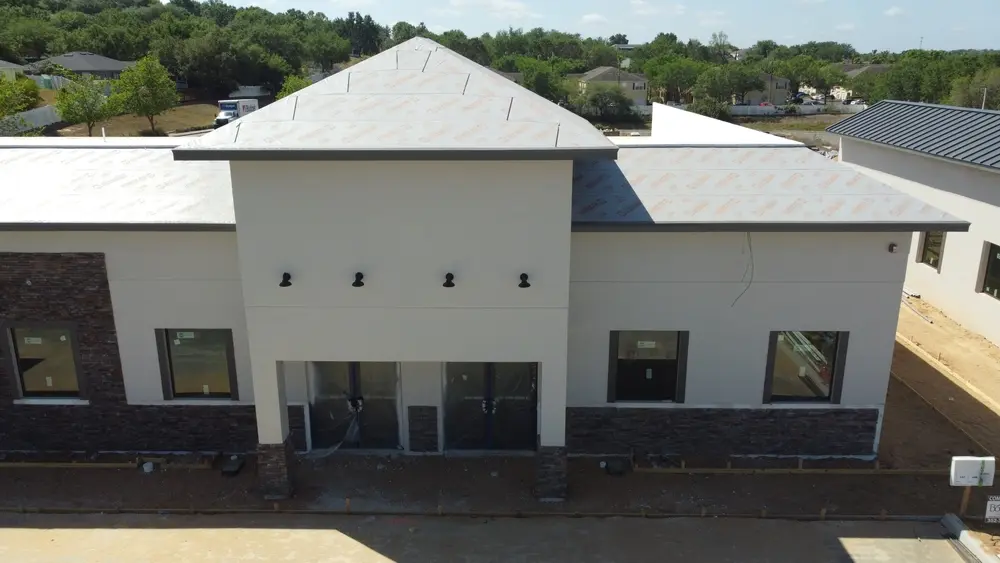
Florida maintains some of the nation’s strictest roofing codes, developed after Hurricane Andrew’s devastating impact in 1992. These requirements offer useful guidance for any building in a high-wind region.
High-Velocity Hurricane Zone (HVHZ) Requirements
Miami-Dade and Broward counties fall under HVHZ standards, which require:
- All roofing materials must have a valid Notice of Acceptance (NOA) or Florida Product Approval
- Testing to TAS 100, 101, 102, and 125 for wind and wind-driven rain resistance
- Minimum four nails per shingle statewide, with six nails required in HVHZ zones
- Ring-shank nails for roof deck attachment to resist pull-through
- Full peel-and-stick underlayment over the entire roof deck in HVHZ areas
Wind-Borne Debris Region (WBDR) Standards
Most of Florida outside HVHZ falls under WBDR requirements, where basic wind speeds start at 110 mph. Even outside Florida, these standards represent best practices for hurricane-prone and high-wind coastal areas.
How Do You Choose the Right Roof for Your Building?
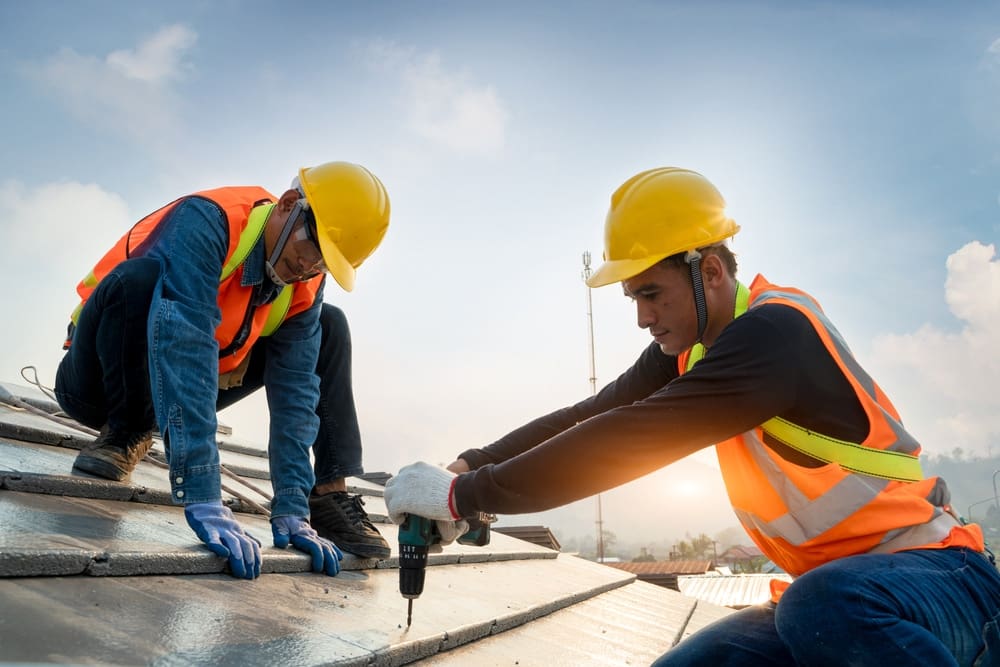
Selecting the best roof for windy areas requires evaluating several factors specific to your building and location.
Consider Your Geographic Location
Coastal properties within 3,000 feet of the ocean face additional challenges from salt spray corrosion. FEMA recommends stainless steel fasteners and corrosion-resistant clips in these zones.
Evaluate Building Height and Exposure
Taller buildings and those in open terrain experience higher wind loads than low-rise structures in developed areas. Your roof system must be engineered for your specific conditions.
Account for Roof Configuration
Complex roof shapes with multiple penetrations, HVAC equipment, and irregular edges require additional design attention. Each penetration creates a potential weak point that must be properly flashed and secured.
Balance Performance with Budget
While standing seam metal roofing offers superior wind performance, it costs more upfront than single-ply alternatives. Consider lifecycle costs, including potential repair expenses after storms, when comparing options.
Key Takeaways
- FM Global wind ratings (1-60, 1-90, 1-120) indicate how many pounds per square foot of uplift pressure a roof system can withstand
- Standing seam metal roofing provides excellent wind resistance when properly engineered and installed
- TPO and PVC membranes with heat-welded seams outperform adhesive-bonded systems in high-wind applications
- Proper installation, especially at corners and perimeters, matters more than material selection alone
- Florida’s building codes offer a useful benchmark for wind-resistant construction anywhere
Protecting your commercial building from wind damage starts with choosing the right roof system and ensuring professional installation. CES Roofing specializes in commercial roofing solutions designed for Florida’s demanding climate, including Cat 5 Hurricane Proof Roof systems engineered to withstand the most extreme conditions.
Don’t wait for the next storm to test your roof’s wind resistance. Contact CES Roofing today for a comprehensive roof assessment and learn how our commercial roofing expertise can protect your building for decades to come.