

When hurricane season approaches, facility managers and commercial property owners face a critical question: is your roof designed to withstand extreme winds? The shape of your roof plays a significant role in determining whether your building survives a major storm intact or suffers catastrophic damage. Understanding which roof shapes perform best during hurricanes can help you make informed decisions about new construction, retrofits, or roof replacement projects.
This guide breaks down the science behind hurricane-resistant roof design, compares common roof shapes, and provides actionable recommendations for protecting your commercial property.
What Makes a Roof Shape Hurricane-Resistant?
A hurricane-resistant roof shape must address three primary wind-related challenges: uplift forces, direct wind pressure, and debris impact. Wind forces on a roof tend to be uplift forces. This explains why roofs are often blown off during an extreme wind event.
The aerodynamics of your roof determine how wind interacts with your building. When hurricane-force winds strike a structure, they create pressure differentials that can literally lift a roof off its supports. Roof shapes that allow wind to flow smoothly up and over the structure experience significantly less stress than those that catch wind like a sail.
Hip roofs slope upward from all sides, creating a more aerodynamic profile that allows hurricane-force winds to flow over rather than push against the structure. This fundamental principle guides most recommendations for hurricane-prone regions.
Hip Roofs: The Top Choice for Hurricane Protection
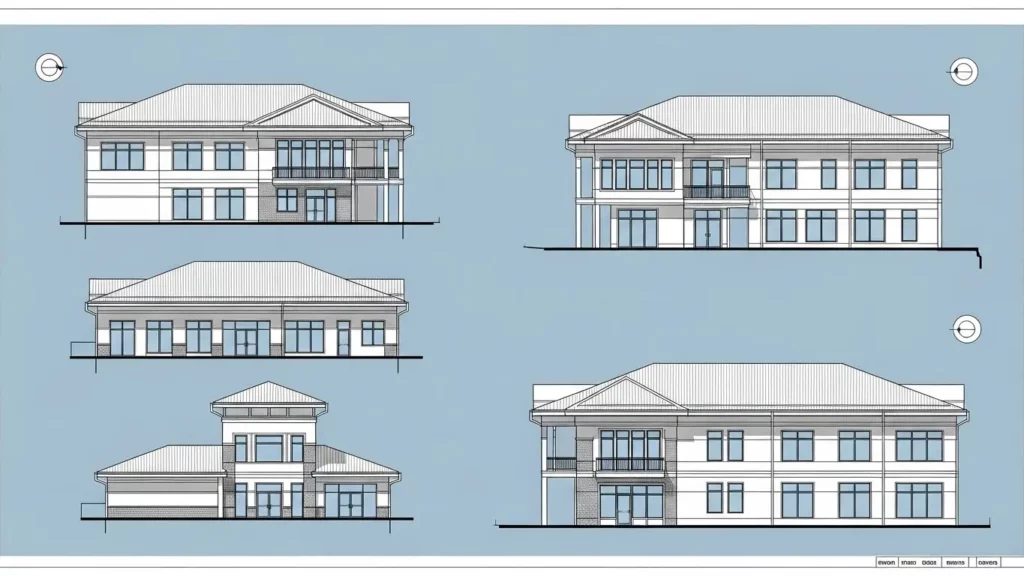
A hip roof is the best roof shape for hurricane resistance. A hip roof is more resistant to wind damage than a gable-style roof because hip roofs are sloped on all sides.
Hip roofs feature four sloping sides that meet at a central ridge or peak. This design offers several advantages during extreme wind events. The slopes on all sides eliminate the flat vertical surfaces that catch wind. The self-bracing design distributes pressure evenly across the entire structure. Additionally, the aerodynamic profile reduces turbulence and vortex formation around the roof.
A gable roof experiences nearly 60% more destructive force than a hip roof because of three key flaws: the “sail effect” where large flat ends catch wind, concentrated stress on end walls, and dangerous wind vortexes created by sharp edges.
For commercial properties considering new construction or major roof replacement, a four-slope hip roof provides superior protection compared to traditional gable designs. Working with experienced commercial roofing professionals ensures proper design and installation.
The Optimal Roof Pitch for Wind Resistance
Beyond shape, the angle or pitch of your roof significantly affects hurricane performance. A 30-degree roof slope has the best results. This translates to approximately a 7:12 pitch, meaning the roof rises 7 inches for every 12 inches of horizontal run.
Why does this angle work best? Roofs that are too flat create greater uplift forces because wind flowing over the surface creates suction. Roofs that are too steep act like sails, catching wind directly and transferring enormous pressure to the structure below.
Engineers recommend a 4-slope hip roof with slopes at a 30-degree angle to resist uplift caused by high winds and storms. This design performs better in high wind situations than a 2-slope gabled roof.
How Do Other Roof Shapes Compare?
Gable Roofs
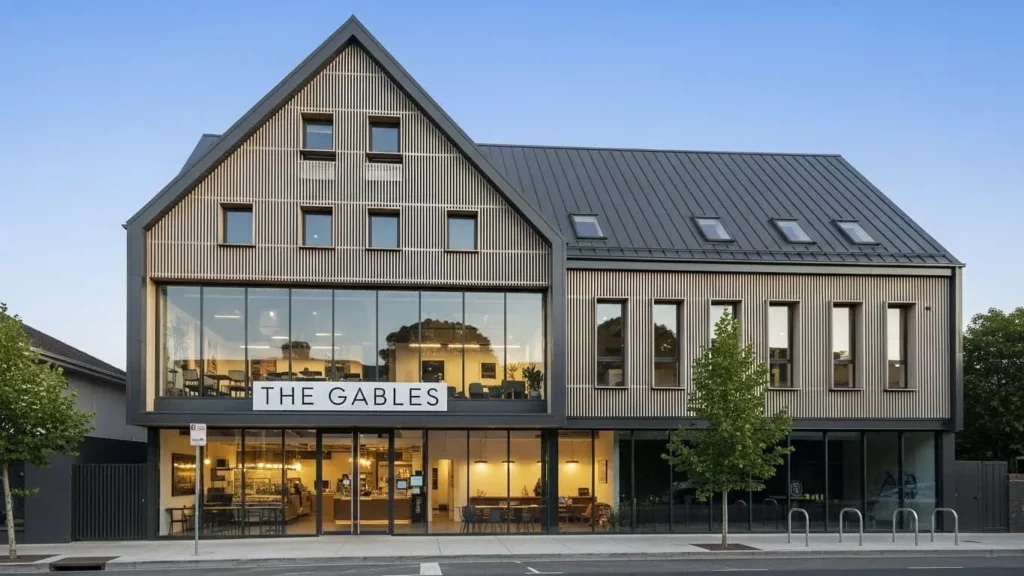
Gable roofs remain the most common design because they cost less to build. However, they present significant vulnerabilities during hurricanes. The triangular end walls—called gable ends—act as large flat surfaces that catch wind. If a gable end fails, it can trigger progressive failure of the entire roof system.
Gable end walls are at risk for damage in hurricanes because of their shape. Wind pressures can push or pull a gable end wall and cause it to collapse if it is not properly braced. FEMA
If your commercial building has a gable roof, reinforcement through bracing and hurricane straps can improve performance, though it will never match a hip roof’s inherent wind resistance.
Hexagonal and Octagonal Roofs
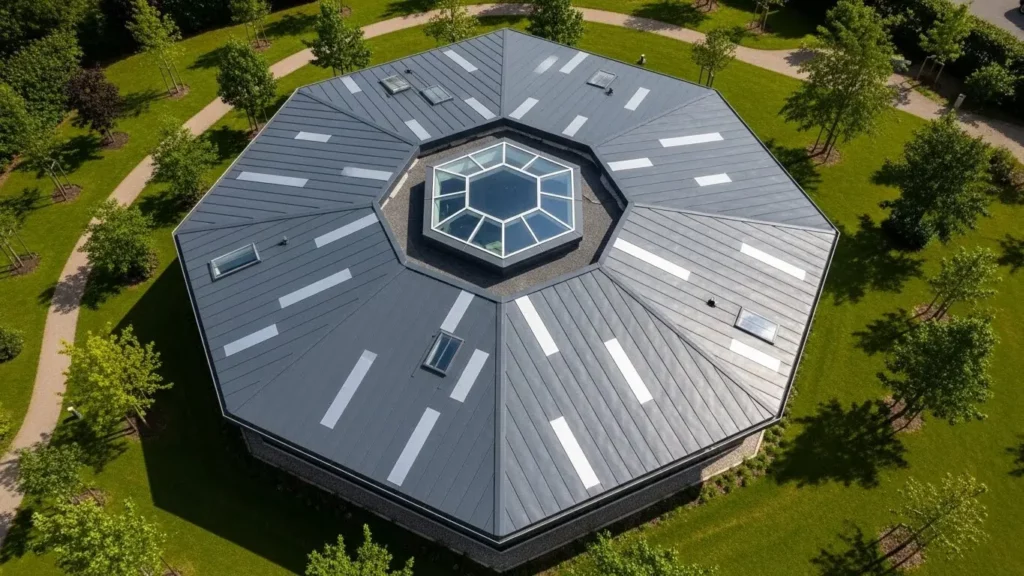
Roofs featuring a hexagon or octagon shape reduce wind load and perform better during hurricanes. These shapes distribute wind pressure more evenly across the roof surface.
While less common in commercial construction, multi-sided roof designs offer excellent hurricane resistance. The rounded profile minimizes areas where wind can exert concentrated pressure.
Flat and Low-Slope Commercial Roofs
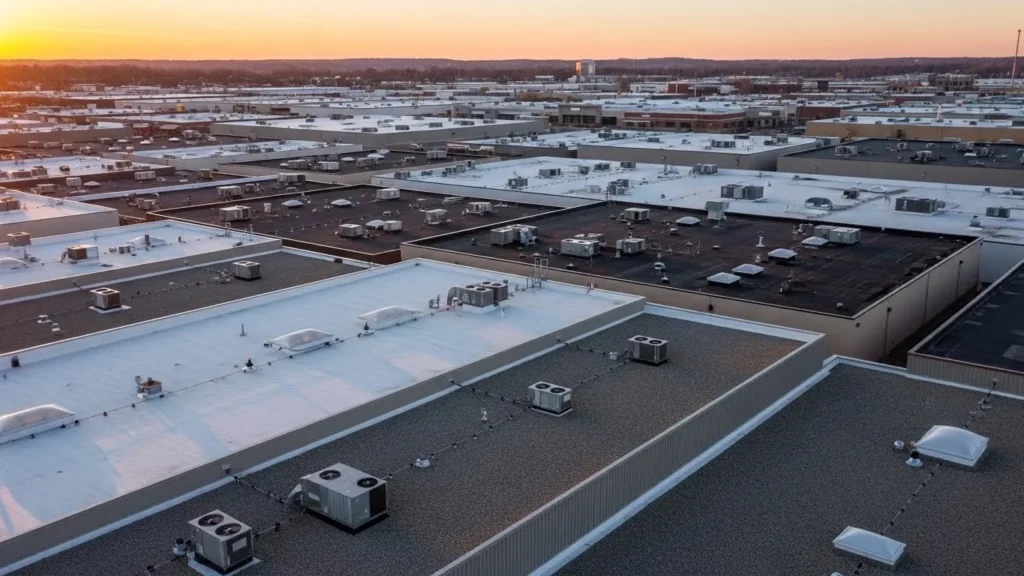
Many commercial buildings feature flat or low-slope roofs for practical reasons. While these designs face unique challenges during hurricanes, proper installation and materials can provide adequate protection.
According to FEMA guidelines on low-slope roofs, key considerations include securing edge flashings and copings to resist wind uplift, using tested roof systems that meet local wind requirements, and eliminating loose materials like gravel ballast that can become projectiles.
For flat commercial roofs, the membrane attachment method, edge detailing, and drainage system design all contribute to hurricane performance.
Key Takeaways: Quick Facts on Hurricane-Resistant Roof Shapes
- Best shape: Hip roof with 4 slopes
- Optimal pitch: 30 degrees (7:12 slope)
- Maximum eave overhang: 20 inches or less
- Worst performer: Gable roof with unbraced end walls
- Critical addition: Hurricane straps connecting roof to walls
- Material matters: Metal roofing can withstand winds up to 160 mph
What About Roof Materials?
While shape provides the foundation for hurricane resistance, materials matter too. Metal roofs can last up to 50 years or more with proper maintenance, and many metal roofing systems are rated for winds up to 140 mph or higher.
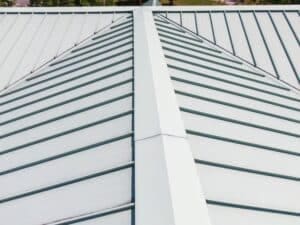
For commercial applications, several materials offer strong hurricane performance. Metal roofing provides excellent wind and impact resistance with interlocking panels. Single-ply membranes like TPO, PVC, and EPDM withstand high winds when properly installed. Modified bitumen’s multiple layers provide robust protection against wind and rain. Concrete and clay tiles resist wind through weight, though they require proper fastening.
The Insurance Institute for Business & Home Safety (IBHS) has conducted extensive research on roofing performance during hurricanes. Based on decades of research, FORTIFIED is a voluntary, beyond-code construction and re-roofing method to strengthen homes and businesses against severe weather, including high winds, hurricanes and tornadoes.
How Can You Improve Your Existing Roof’s Hurricane Resistance?
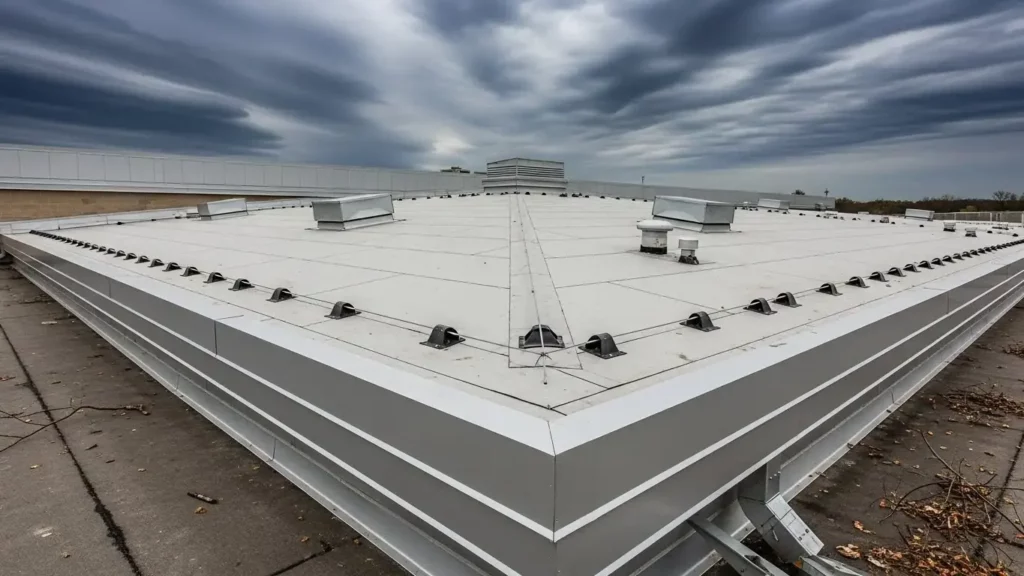
Not every property owner can install a new hip roof. Fortunately, several improvements can strengthen existing commercial roofs.
Add Hurricane Straps and Clips
Connecting roofs to walls matters. Strong connections between the structure and its foundation and connections between walls are good. Connections are generally vulnerable but can be inexpensively strengthened.
Hurricane straps create a continuous load path from roof to foundation, preventing the roof from separating during high winds.
Reinforce Gable Ends
For existing gable roofs, adding bracing to gable end walls can prevent collapse. This retrofit is especially important for older buildings constructed before modern hurricane building codes.
Reduce Overhang Length
To balance the lift effect of powerful high winds, eaves should be minimized to 20 inches. Long overhangs give wind more surface area to push against, increasing the risk of roof failure.
Upgrade Edge Detailing
On flat and low-slope roofs, edge flashings and copings often fail first during hurricanes. Using mechanical fasteners instead of cleats and installing anti-bridging bars can significantly improve performance.
Seal the Roof Deck
Adding a secondary water barrier beneath your roof covering protects against water intrusion if the outer membrane or shingles are damaged. This layer of protection can prevent interior damage even when the roof covering fails.
Why Roof Shape Matters for Insurance and Building Codes
Florida and other hurricane-prone states have implemented strict building codes requiring specific roof designs and installation methods. Florida’s roofing regulations are designed to ensure that structures can withstand the severe weather conditions associated with hurricanes.
Many insurance companies offer premium discounts for buildings with hurricane-resistant roof features. A University of Alabama study found FORTIFIED homes suffered significantly less damage and required fewer insurance claims than homes built through standard construction methods when Hurricane Sally made landfall.
Investing in proper roof design and installation can reduce both hurricane damage risk and long-term insurance costs.
Protecting Your Commercial Property
Selecting the right roof shape represents one of the most important decisions for commercial property protection in hurricane-prone regions. A hip roof with a 30-degree pitch, limited overhangs, and proper hurricane connections provides the strongest defense against extreme winds.
For existing buildings, retrofits including hurricane straps, gable end bracing, and edge reinforcement can dramatically improve performance. Regular inspections identify vulnerabilities before hurricane season arrives.
Whether you’re planning new construction, considering a major roof replacement, or simply want to assess your current roof’s hurricane readiness, professional evaluation is essential. At CES Roofing, our team specializes in commercial roofing solutions designed to withstand the most severe weather conditions, including our Cat 5 Hurricane Proof Roof systems. Contact us today for a comprehensive roof assessment and learn how we can help protect your commercial property from the next major storm.