

If you own or manage several aging Florida commercial roofs, how you handle them carries a significant tax consequence. A silicone coating restoration on a roof that is still structurally sound can often be written off in the same year the work is completed, either as a repair expense or, when the scope is broad enough to count as a capital improvement, under Section 179. A full tear-off replacement usually has to be capitalized and recovered over 39 years. Across a portfolio of buildings, that difference compounds fast.
Silicone coating restoration is the work we do most at CES, with more than 15 million square feet of commercial roofing installed across Florida, so we spend a lot of time helping owners understand how the tax treatment works before they commit to a six- or seven-figure decision. We are commercial roofing experts, and we are not tax advisors, so treat everything below as general education and confirm the specifics with your CPA before you file. The numbers and rules that follow change from year to year, and your situation depends on your entity structure and income.
How Section 179 treats a restoration differently from a replacement
Start with how the IRS classifies the roof itself. The structural roof of a commercial building is nonresidential real property, which is depreciated over 39 years using straight-line depreciation (IRS Publication 946). Spend a large sum on a full tear-off replacement and, absent an election, you recover that cost in small slices over nearly four decades. That ties up capital you could be using elsewhere.
Section 179 changed part of this picture. The Tax Cuts and Jobs Act added roofs to the list of “qualified real property” eligible for immediate first-year expensing, alongside HVAC, fire protection, and security systems. So even a capitalized roof project can, in many cases, be expensed in year one instead of depreciated over 39 years, as long as you stay inside Section 179’s annual limits. We cover the general mechanics of deducting a full replacement in our companion article on whether commercial roof replacements are tax deductible, and the basics of the deduction itself in our Section 179 overview, so we will not rebuild that ground here.
The treatment worth understanding is the one that applies specifically to a coating restoration, and it is often better than what a replacement gets.
When a coating is a deductible repair
The best tax outcome for a coating is a straight repair deduction under Section 162 of the tax code. A repair is fully deductible in the current year, and it sidesteps Section 179’s dollar caps, phase-out thresholds, and taxable-income limits entirely.
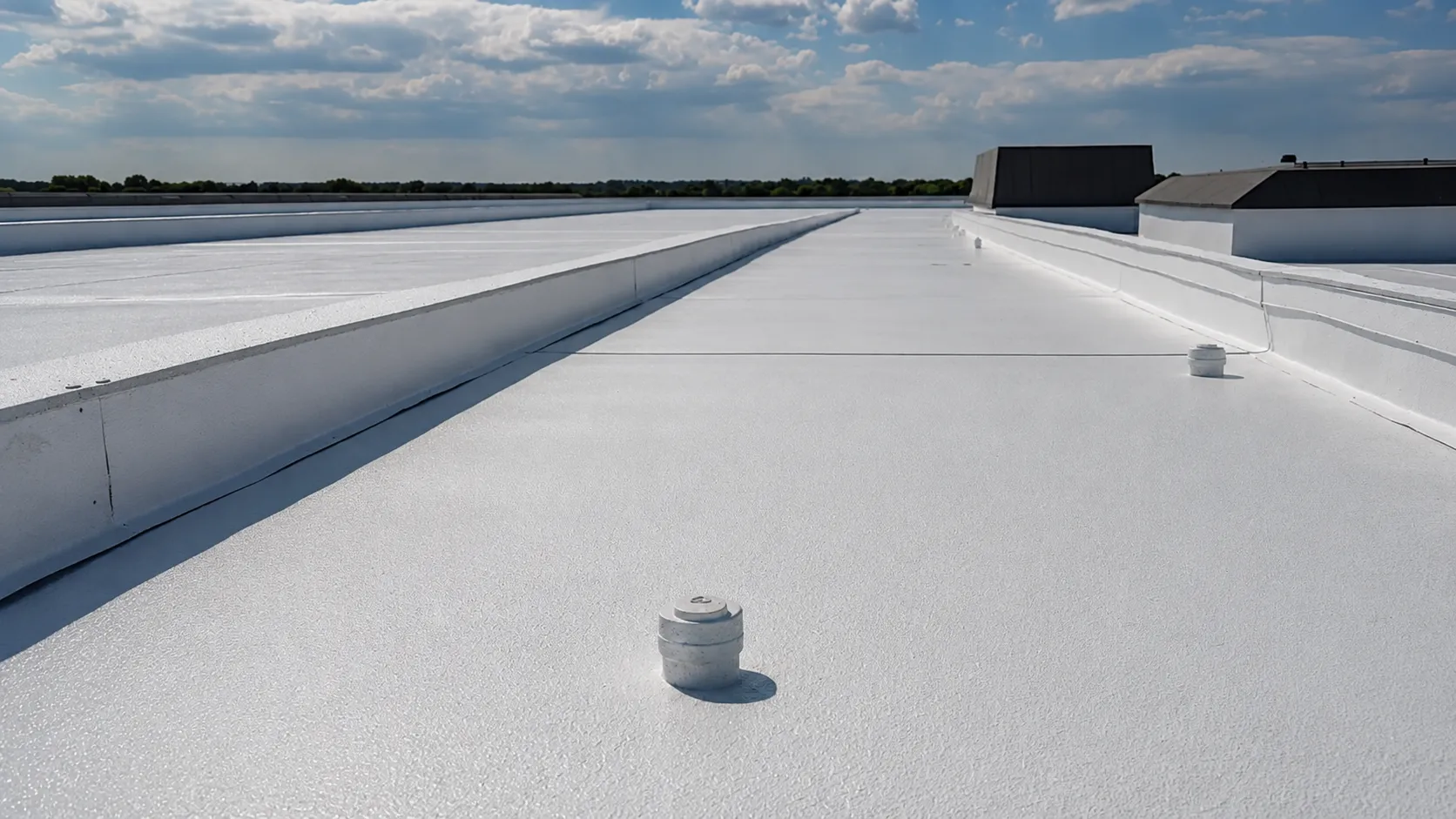
Whether a roof project is a repair or a capital improvement is governed by the IRS Tangible Property Regulations. When we apply a liquid silicone coating over an existing, intact membrane, treat the seams and penetrations, and return a structurally sound roof to watertight condition using comparable modern materials, that work generally keeps the roof in its ordinary operating condition rather than materially improving it. Under the regulations, that leans toward a deductible repair. Confirm the classification with your tax advisor, because it turns on the exact scope of work on your invoice.
When a coating is a Section 179 capital improvement
Not every coating is a repair. If the work goes beyond restoring the roof and instead betters it, adapts it to a new use, or amounts to replacing a major structural component, the IRS treats it as a capital improvement that must be capitalized. That is where Section 179 becomes useful. Because roofs are qualified real property, you can generally elect to expense that capitalized cost in year one, up to the annual limits, rather than depreciating it over 39 years.
The practical takeaway for portfolio owners is that a well-scoped coating restoration usually lands you a first-year write-off either way, as a Section 162 repair if the scope stays narrow, or through a Section 179 election if it does not. A full replacement, by contrast, is always a capital improvement, so your only path to a first-year deduction is Section 179 and its limits. Again, your CPA should make the final call on how any specific project is classified.
Why restoration qualifies for first-year treatment more easily than replacement
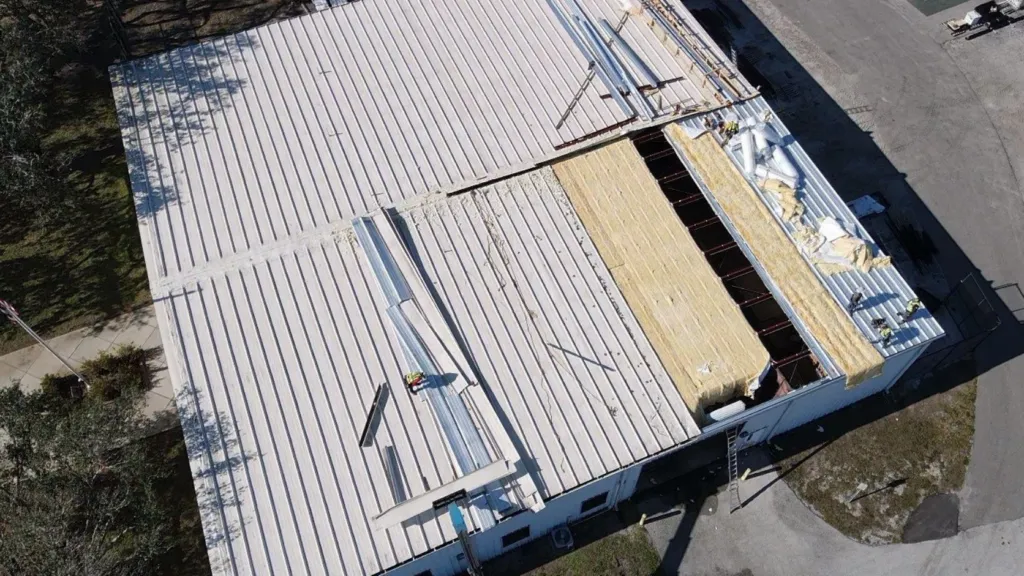
The IRS uses what practitioners call the BAR test to decide whether roof work has to be capitalized. If the work is a Betterment, an Adaptation, or a Restoration of the building, it is a capital improvement. Understanding the three helps explain why a coating usually avoids them and a tear-off usually does not.
- Betterment. Work that fixes a defect that existed before you bought the building, or that materially increases the roof’s capacity, strength, or quality. Coating a sound roof to keep water out generally is not a betterment. Coating a roof shortly after purchase to correct a leak that was already there can be.
- Adaptation. Work that changes the roof to a new use, such as reinforcing it to carry a rooftop restaurant. Coatings rarely trigger this.
- Restoration. Replacing a major structural component or rebuilding the roof to like-new condition. A full tear-off of the membrane, insulation, and decking is the textbook example, and it almost always has to be capitalized.
A coating that leaves the load-bearing structure and insulation in place tends to stay clear of all three triggers. Once a project replaces a large share of the underlying structure, practitioners generally treat the whole job as a capitalized restoration. This is not a bright statutory line, which is exactly why the scope described on your invoice matters and why your tax advisor should review it.
The two approaches stack up like this on the points that tend to matter to portfolio owners:
| Silicone coating restoration | Full tear-off replacement | |
| Typical tax treatment | Often a current-year repair deduction; Section 179 available if capitalized | Capitalized; Section 179 election available within limits, otherwise 39-year depreciation |
| Relative cost of the roof work | Roughly one-third the cost of a full replacement | Full capital cost |
| Manufacturer warranty | 10, 15, or 20-year manufacturer-backed warranty | 10, 15, or 20-year manufacturer-backed warranty |
| Time on site | About 2 to 5 days | Weeks, sometimes longer |
| Disruption and waste | No tear-off, minimal disruption, no landfill waste | Significant disruption and disposal |
A coating restoration carries the same 10, 15, or 20-year manufacturer warranty terms you would get on a new system, and the roof can be washed and re-coated at the end of that term to extend its life further. Actual added life depends on the coating system, the dry film thickness applied, installation quality, and Florida’s heat, UV, and moisture exposure, so we present it as a range rather than a promise. You are not trading away roof life to get the tax and cost advantages.
The 2026 Section 179 numbers portfolio owners should know
When a project does have to run through Section 179, the annual limits decide how much you can expense. These are public IRS figures, and they are indexed for inflation each year, so verify the current-year numbers with your advisor before planning around them. For tax years beginning in 2026:
- The maximum Section 179 deduction is $2,560,000.
- The deduction begins phasing out dollar-for-dollar once you place more than $4,090,000 of qualifying property in service during the year.
- The deduction is eliminated entirely at $6,650,000 of qualifying property placed in service.
Two more rules shape the math. Section 179 cannot exceed your active taxable business income for the year, so it cannot create a net loss. Any amount disallowed for that reason is not lost; it carries forward to future years and is claimed on IRS Form 4562, where the election is formally made. For an owner with several capitalized roof projects in one year, these caps are easy to bump into, which is where sequencing comes in.
The multi-property strategy: sequencing projects across tax years
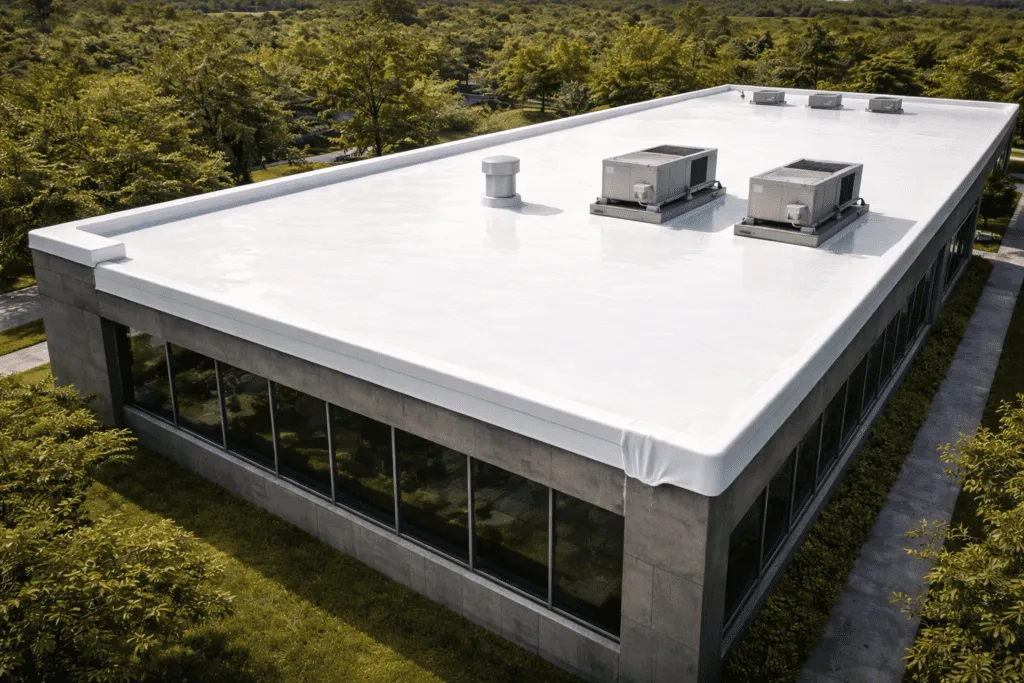
This is where owning more than one roof turns from a liability into a plan. The deduction is triggered on the date a roof is “placed in service,” meaning completed and ready to function as a roof. Signing a contract, paying a deposit, or having materials delivered does not count.
Because a silicone coating restoration typically takes only 2 to 5 days, you have precise control over when each roof crosses that finish line. A full replacement takes weeks, which makes its completion date far harder to steer. That control is the lever for portfolio planning. By restoring a set of roofs in the fourth quarter of one year and the rest in the first quarter of the next, an owner can keep annual spending under the phase-out threshold in both years and effectively open two separate deduction windows instead of crowding everything into one. Your CPA can map which buildings belong in which tax year based on your income and the current limits.
Entity structure adds a wrinkle that catches many portfolio owners off guard. If your properties sit inside an LLC, S-corporation, or partnership, the Section 179 limits apply twice, once at the entity level, and again at your individual level when the deduction passes through on a Schedule K-1. You cannot spread holdings across several LLCs to escape the personal cap, because the deductions aggregate on your own return. This part is complex, and it is where coordinating with a tax advisor pays for itself.
Whether your buildings are clustered around Tampa, spread through Orlando, or scattered across the state, we have handled the logistics of multi-location rollouts before, from a 23-location restaurant program to single restorations north of 100,000 square feet. Sequencing a dozen roofs to hit specific completion dates is an operational problem as much as a tax one, and both have to line up.
Which roofs in your portfolio are candidates for restoration
The tax advantages only apply if the roof is a real restoration candidate, and this is where we will give you a straight answer rather than tell you what you want to hear. A coating restoration only works on a roof that is aging or weathered but still structurally sound. If the substrate underneath is saturated, coating over it traps the moisture and voids the warranty.
In Florida, this is not a judgment call you want to guess at. State building code requires a full tear-off once more than 25% of a roof is wet, with no restoration option past that point. The way to know for certain is to measure it. We run thermal imaging on the roof, which detects trapped moisture and reports the percentage present in a given area. Most commercial roofing contractors do not carry this capability, and without it a contractor is estimating. That same moisture data is also what backs up a repair classification at tax time, since it documents that the roof was sound before the coating went on.
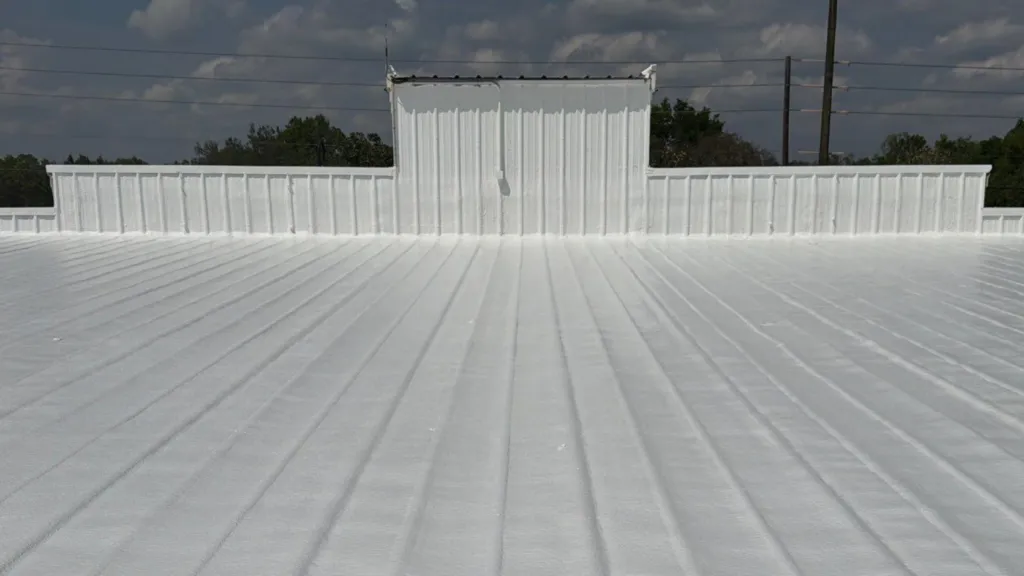
So across a portfolio, the honest first step is sorting the roofs that can be coated from the ones that need replacing. We would rather tell you that two of your five roofs need a tear-off than coat all five to book the work, because a coating over a bad substrate fails, and a failed roof costs you far more than the deduction ever saved. On metal roofs specifically, a spray foam and coating system can often restore and protect the structure without a re-skin, which is a related path worth evaluating in the same pass.
A note on the expired Section 179D energy deduction
For years, reflective “cool roof” coatings on Florida buildings could also qualify for the Section 179D deduction for energy-efficient commercial buildings. That window has closed for new work. Under the 2025 One Big Beautiful Bill Act, Section 179D no longer applies to property where construction begins after June 30, 2026 (U.S. Department of Energy). If you did not begin construction before that date, 179D is off the table for your upcoming restorations, and the strategy now runs through Section 162 repair deductions and Section 179 expensing instead.
This does not change the value of a reflective coating on its own terms. White silicone coatings still meet Florida’s building-code reflectance requirements for low-slope roofs and still cut cooling loads, which is why energy-efficient coatings remain worth considering. It just means the federal energy deduction is no longer part of the calculation for newly started projects. Confirm your own 179D eligibility with your advisor, especially if any of your projects broke ground earlier in 2026.
Get your portfolio evaluated
The tax strategy is real, and for a portfolio of aging Florida roofs it can be substantial. It starts with knowing which roofs qualify for a restoration and which do not, and that answer comes from measuring each roof rather than pitching it. We offer a free commercial roof evaluation that includes drone assessment and, where conditions warrant, thermal moisture readings, so you know exactly what you are working with on each building before you take anything to your CPA.
If you have several roofs coming due and want to understand your options across the portfolio, call us at (813) 419-1918 or book a free evaluation. We will tell you what we find, building by building, and you and your tax advisor can plan from there.
**CES Roofing does not provide tax, legal, or accounting advice. Tax treatment depends on the taxpayer’s circumstances and the specific scope of the roofing project. Property owners should consult their CPA or tax advisor regarding eligibility for any deduction or election.