

A commercial roof coating restoration in Florida usually runs roughly one-third the cost of a full roof replacement, but two roofs of the same square footage can still price very differently. The square footage is only the starting point. What actually sets the price is the condition of the existing roof, how much prep and repair it needs, the coating system it calls for, and several other factors that only show up once someone is on the roof. At CES Commercial Roofing, silicone coating restoration is the single service we perform most, and across 15 million square feet of commercial roofing installed, we can tell you that a real number for your building comes from a free, drone-assisted evaluation of your specific roof.
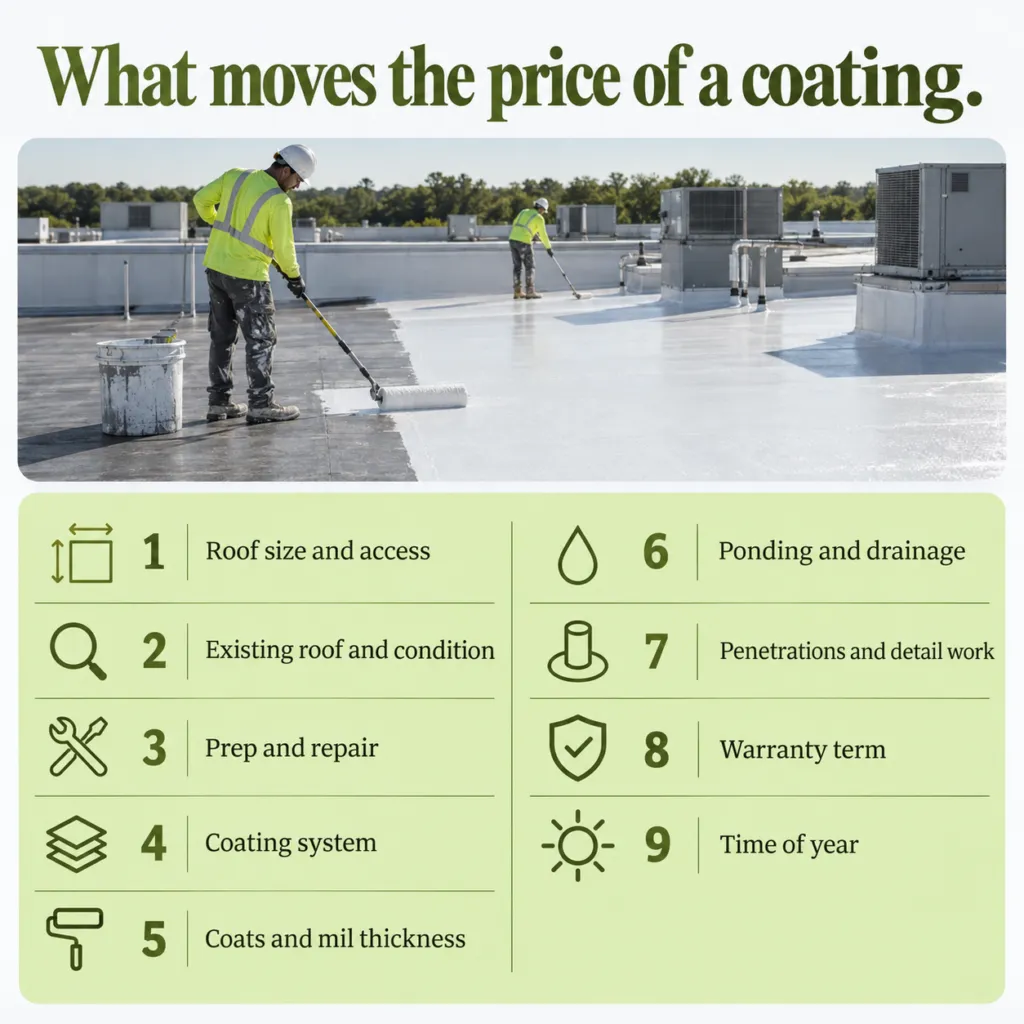
This article walks through the nine factors that move the price of a commercial roof coating, so that when you read a proposal you can see exactly what you are paying for.
Why there’s no single price per square foot
Search for coating costs and you will find a per-square-foot range on almost every page. That number is easy to publish and easy to misread. It can be off by a wide margin for any specific roof, because the two biggest cost factors, condition and prep, are invisible from the street and vary enormously from one building to the next. Across a team with 125 years of combined experience, we have never seen a per-square-foot average predict a specific roof’s price well. So rather than hand you a figure that would mislead you, we will walk through the variables that actually move the number, and why an on-site look is the only way to get a real one.
Roof size and access
Larger roofs can earn some economy of scale on material and mobilization, but access usually swings the price more. A single-story flat roof at ground level, with open staging and parking, is straightforward to work. A multi-story roof, or one crowded with rooftop equipment, needs lifts or added fall protection and more setup time. Occupied buildings add coordination, with work hours limited around tenants and extra noise and safety controls in place. Two roofs of identical area can diverge on access alone.
The existing roof and its condition
Metal, modified bitumen, TPO, and other eligible systems each behave differently under a coating, and each may need its own primer and prep. Condition matters more than the material. Two 20,000 square foot TPO roofs will almost certainly restore at different costs based on how each one has aged. A tight, well-maintained membrane is inexpensive to prepare. A weathered one with failing seams and surface breakdown is not.
How much prep and repair the roof needs
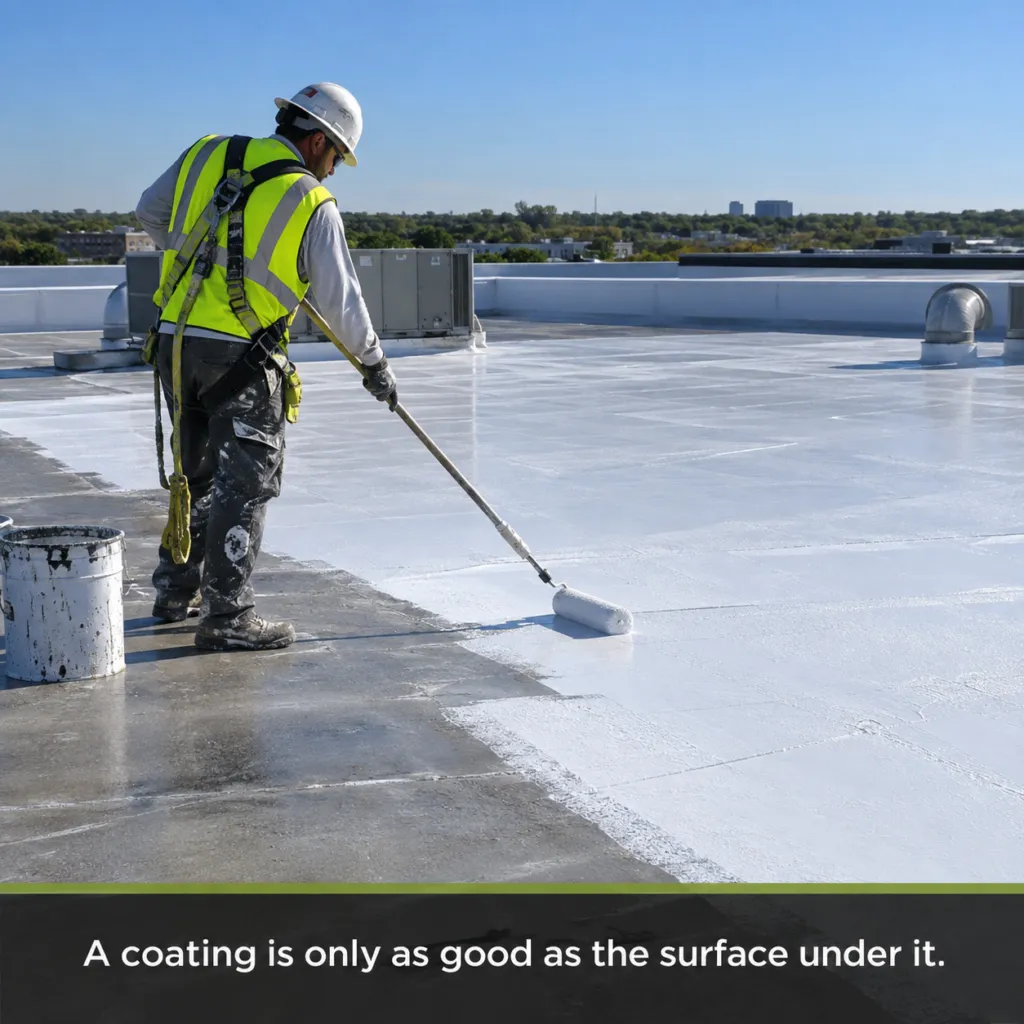
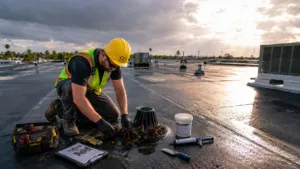
This is often the largest single variable in the whole project. A coating is only as good as the surface under it, so prep is not optional. It can include power washing, priming, resealing seams, replacing failed fasteners, and cutting out and rebuilding any area where moisture is trapped in the membrane, insulation, or deck. Under the Florida Building Code, a new roof covering cannot be applied over a section that is water soaked or deteriorated to the point that it no longer works as a sound base. If too much of the deck is saturated, a coating is no longer viable and the roof has to come off. This is where two similar-looking roofs diverge the most, and it is why a thorough evaluation matters before anyone quotes the job.
Silicone, acrylic, or SPF coating
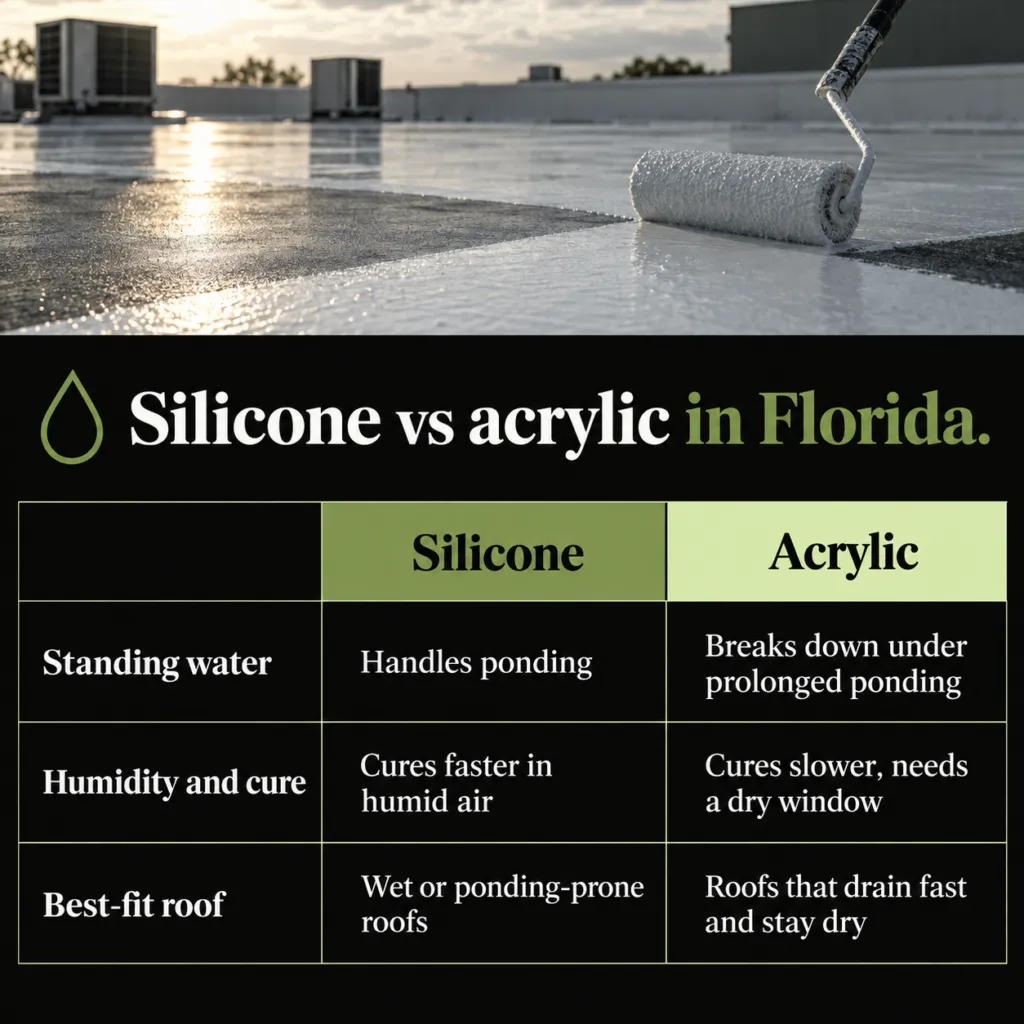
Substrate and exposure drive the system choice, and the system choice drives the price. Silicone is our most-used commercial roof coating in Florida because it holds up to standing water and humidity far better than acrylic, which is more common in dry climates. Acrylic is water based, so prolonged ponding can degrade it, which makes it a fit for roofs that drain quickly and stay dry. Spray polyurethane foam with a protective coating, often called an SPF system, is a related restoration route and a strong option for metal roofs. The foam adds insulation and can re-slope minor low spots before the coating goes on, so a foam-and-coating system carries more material and labor than a straight coating.
Number of coats and mil thickness
Coatings are measured in mils of dry film. A thicker, multi-coat system uses more material and more labor than a thin one, and it generally carries a longer performance life and qualifies for a longer warranty. Mil thickness is usually tied to the warranty term you select, so in practice the number of coats comes down to how long you want the system to last.
Ponding water and drainage correction
Florida’s rainfall makes standing water a real cost factor. Roofs are supposed to drain, and the Roof Coatings Manufacturers Association notes that all roofs should be designed and built for positive drainage so they do not hold water. When a roof ponds, two things affect the price. The coating has to be one that tolerates standing water, which points toward silicone, and any chronic low spots may need drainage correction or additional buildup before the coating goes down. Both add cost, and both are more common on older, wider commercial roofs.
Penetrations and detail work
Vents, drains, curbs, skylights, HVAC stands, and every flashing has to be treated individually, sealed and often reinforced by hand before the open field of the roof is coated. A roof cluttered with penetrations takes more labor and more detail material than a clean, open roof of the same area. It is a common reason two buildings with the same footprint land at different prices.
Warranty term
Manufacturer-backed, renewable warranties are available in 10, 15, and 20 year terms, the same terms you would have on a full replacement. A longer term generally requires a heavier system spec, meaning more coats and more mils, so the warranty you choose directly shapes the system and the price. A silicone coating restoration can add roughly 10 to 20 years to a structurally sound roof, depending on the system, the substrate, sun and weather exposure, and whether the roof is maintained. Longer coverage costs more up front and buys more roof life.
Time of year and weather
Coatings need dry conditions to cure, so Florida’s rainy season affects scheduling and sequencing. Humidity factors in as well. Silicone actually cures faster in humid air, while water-based acrylic cures more slowly and needs a clear window with no rain for a day or so after application. Crews also stop work when dew is likely to form on an uncured coat. Peak-season demand can affect timing too. None of this changes the base scope much, but it can affect how a project is staged and when it can start.
How a coating restoration compares to full replacement
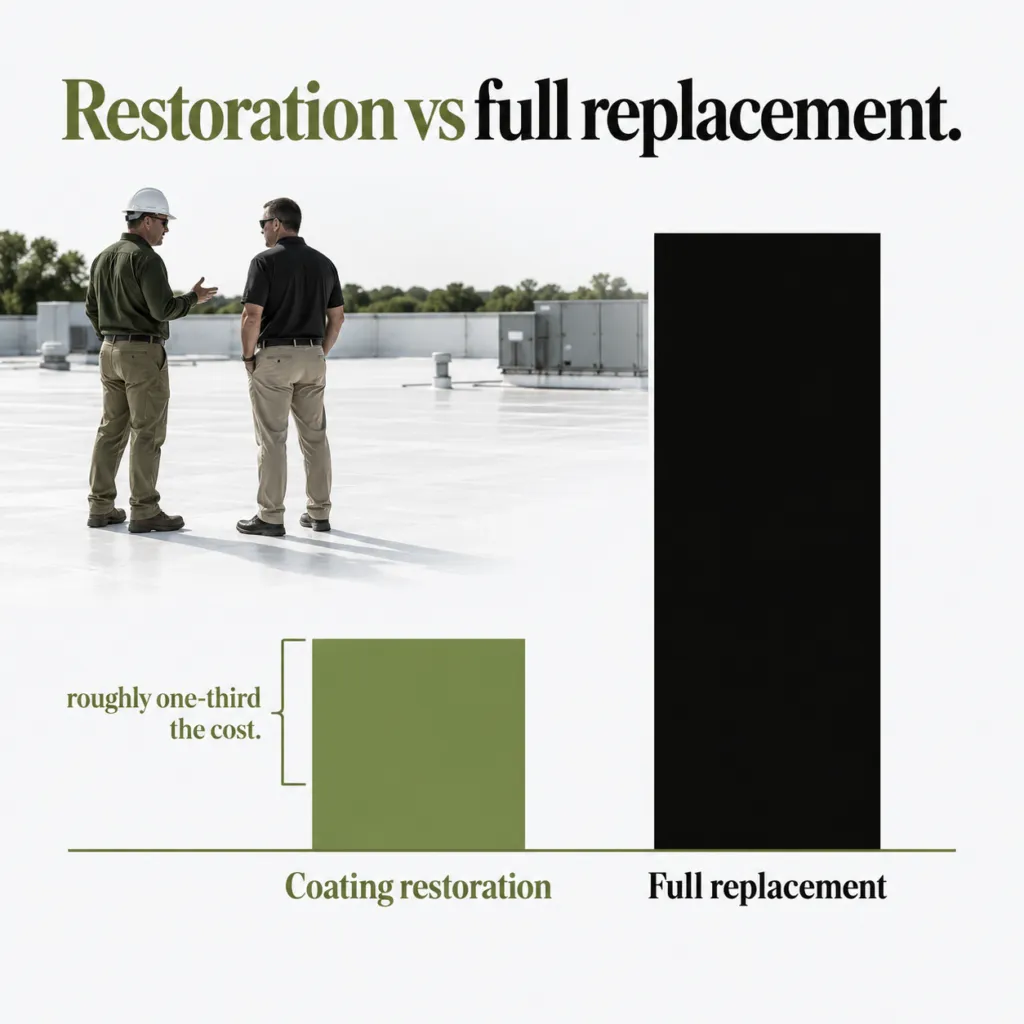
A coating restoration typically runs roughly one-third the cost of tearing off and replacing a commercial roof, while extending the life of a roof that is still structurally sound. We cover the full 20-year math in our breakdown of the business case for commercial roof coatings. Within a coating restoration, the nine factors above are what move the price.
A coating restoration is also generally treated as a repair or maintenance expense rather than a capital replacement, which can change its net cost at tax time. Our article on the Section 179 tax deduction for commercial roof restorations walks through how that works, and your accountant can confirm the details for your situation.
Our price-beat guarantee
If you are comparing quotes, we back our pricing directly. We offer a $1,500 price-beat guarantee on silicone coating systems and a $2,500 price-beat guarantee on SPF systems. Get real evaluations, compare them honestly, and we will stand behind our number.
Frequently asked questions
How long does a commercial roof coating last in Florida?
A silicone coating restoration can add roughly 10 to 20 years to a structurally sound roof. The actual figure depends on the coating system, the substrate, sun and weather exposure, and whether the roof is maintained under its warranty.
Is silicone or acrylic coating better for a Florida roof?
Silicone is the better fit for most Florida roofs because it tolerates standing water and humidity. Acrylic suits roofs that drain quickly and stay dry. Cost tracks whichever system your roof actually needs.
Can you coat a commercial roof that holds water?
Sometimes, using a ponding-tolerant silicone system, but chronic low spots usually need drainage correction first. A roof that stays wet in spots is a prep and drainage question before it is a coating question.
Does a roof coating count as a repair for taxes?
A coating restoration is generally treated as a repair or maintenance expense rather than a capital replacement, which can affect its net cost. Confirm the treatment with your accountant for your specific property.
Schedule a free evaluation
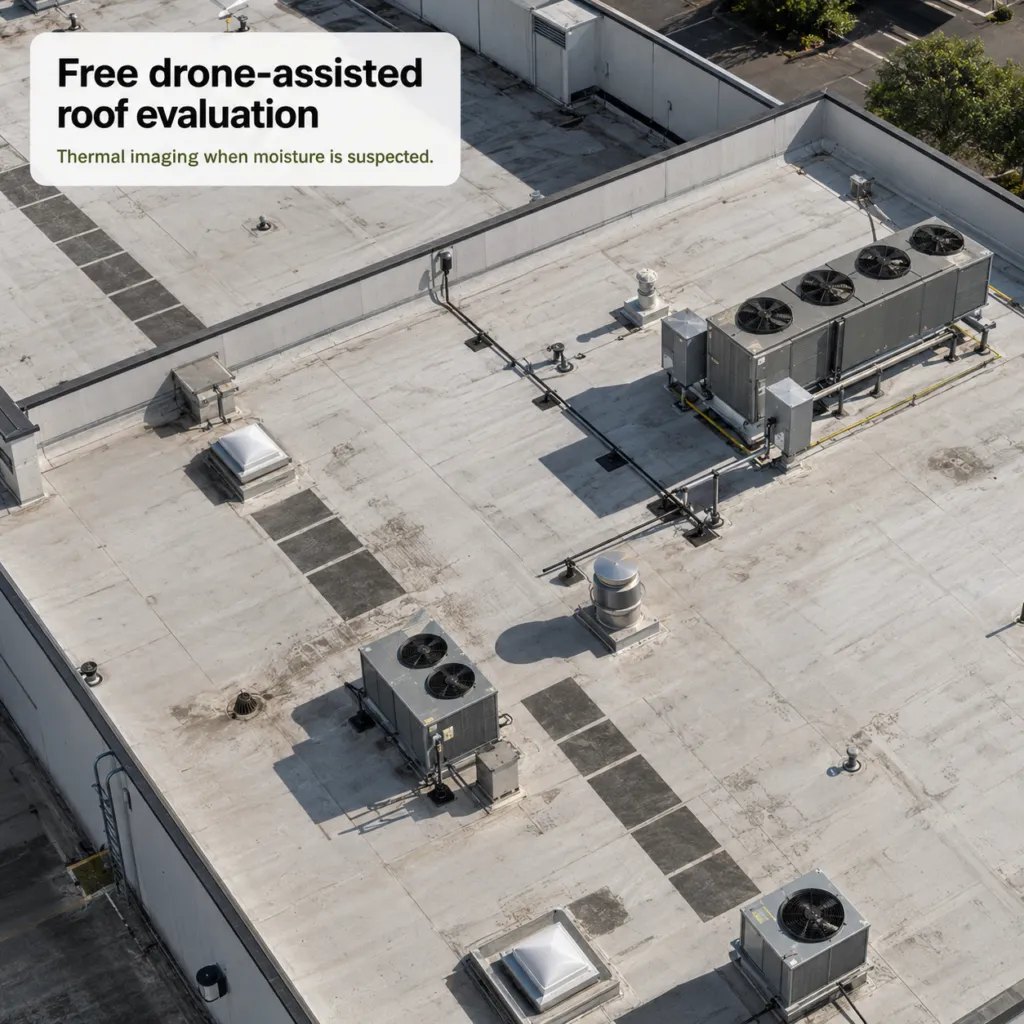
The only way to price your roof accurately is to look at it. At CES Commercial Roofing, our roof evaluations are free and drone-assisted, and when we suspect moisture trapped below the surface we bring in thermal imaging to find it before it turns into a tear-off. We work with commercial property owners and facility managers across Tampa, Orlando, Sarasota, and the surrounding Florida metros. Call us at (813) 419-1918 to schedule a free evaluation and get a number built from your actual roof.