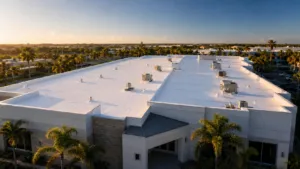


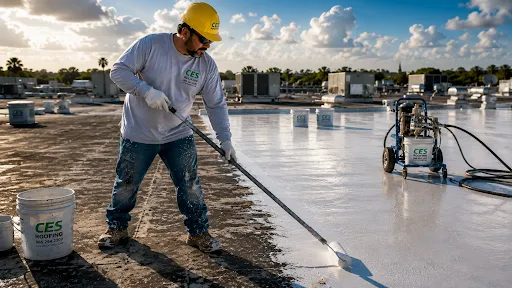
A commercial roof coating is one of the highest-return decisions a property owner can make on a roof that is aging but still structurally sound. For roughly one-third the cost of a full tear-off and replacement, a coating restoration can add years of service life, stop leaks, carry the same manufacturer warranties a new roof would, and in many cases qualify for a same-year tax deduction. Silicone coating restoration is the service we perform most often at CES Roofing, and with 15 million square feet of commercial roofing installed across Florida, we have restored enough roofs to know when a coating is worth it and when it is not.
That last part matters. A coating only delivers these benefits on a roof that is a genuine candidate for one. Below is what a commercial property owner actually gets from a coating restoration, in roughly the order that tends to matter most on a six- or seven-figure building, along with a straight answer on when replacement is the smarter move.
What a commercial roof coating restoration is
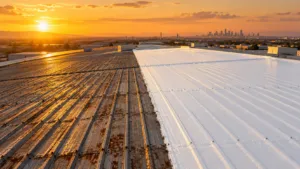
A coating restoration takes an existing commercial roof and applies a liquid coating over the top, after first repairing problem areas and treating the seams, penetrations, and flashings where roofs usually start to fail. It restores a roof you already have rather than installing a new one, and it works on roofs that are structurally sound but aging or weathered. Coatings can be applied over metal, modified bitumen, TPO, and other eligible systems, which is why restoration is an option for such a wide range of commercial buildings.
The scale runs from small strip-mall roofs up to large industrial and institutional projects. We have restored a 110,000-square-foot TPO roof and an 88,850-square-foot metal roof, both with high-solid silicone, and handled coating work on buildings like the Museum of Science and Industry. Our silicone coating restoration service is built around getting those details right, because a coating is only as good as the preparation and repair work underneath it.
Lower cost than a full replacement
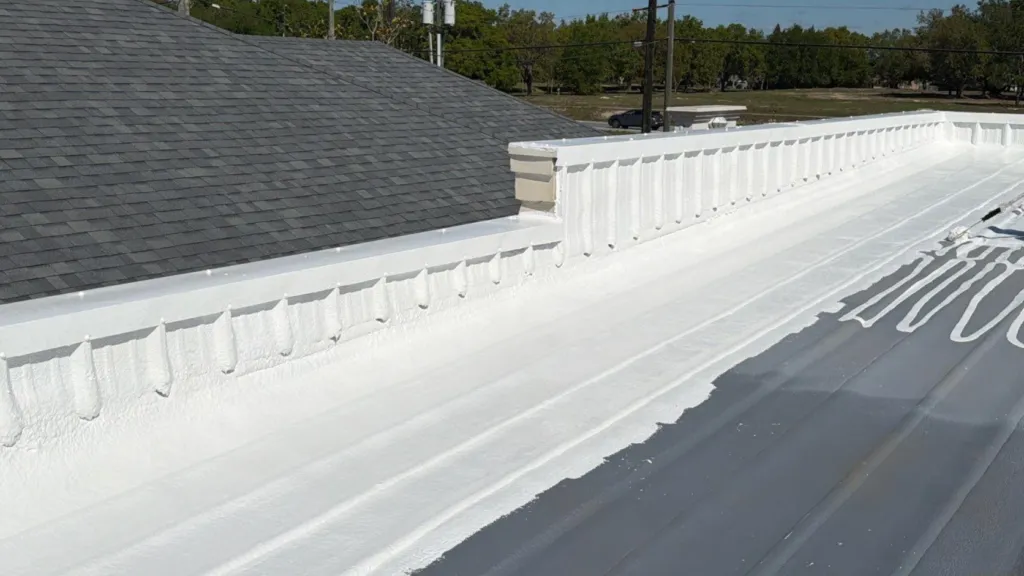
A silicone coating restoration runs roughly one-third the price of a full tear-off and replacement. Most of that difference comes from what a restoration avoids: there is no tearing off and hauling away the old roof, no landfill disposal, a smaller crew, and far less reconstruction. Federal roofing specifications describe liquid-applied systems as a way to extend service life in place of removal and replacement, which is the same logic behind the savings.
The catch that some contractors skip is that pricing varies from roof to roof, even between two buildings of identical size. One roof might have areas of trapped moisture that need to be cut out and repaired, deteriorated seams, or vents and curbs that need attention, and the next might not. That is why we do not publish a flat per-square-foot price. Even where a roof is a candidate for both, a restoration almost always comes in well under a commercial roof replacement in Tampa or anywhere else in Florida.
Potential Section 179 tax savings
The tax treatment is one of the largest benefits of a coating restoration, and one many building owners overlook. A full roof replacement is generally a capital expenditure, which means it gets depreciated over many years. A coating restoration is generally treated as a repair or a qualifying improvement instead, and under Section 179 of the tax code the cost can often be deducted in the year the work is completed rather than spread out over decades. For an owner with multiple properties, deducting the full cost in a single tax year can meaningfully change the math on a restoration.
Tax outcomes depend on the specifics of the project and how it is classified, so this is not automatic. We are roofers, not tax advisors, so confirm the treatment for your building with your own tax professional before you count on it. Our overview of whether commercial roof work is tax deductible walks through the distinction between a repair and a capital improvement in more detail.
Full manufacturer warranty coverage at a lower cost
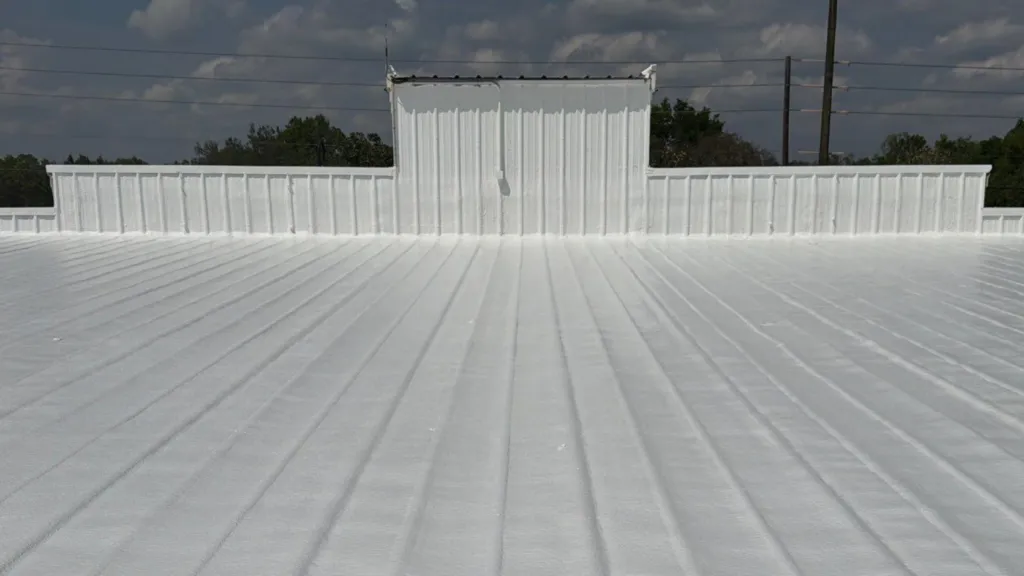
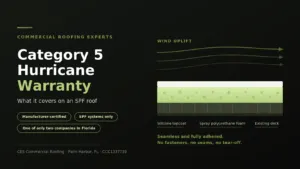
A coating restoration comes with the same warranty terms a new roof would. Manufacturer-backed warranties of 10, 15, or 20 years are available and renewable. Coating restorations are also eligible for the Manufacturer Lifetime Renewable Leak-Proof Warranty, which covers both labor and materials for the life of the restored system.
The distinction to understand here is the difference between a material warranty and a system warranty. A material warranty covers only defects in the coating product itself. A system warranty covers the entire installed system, labor and materials together, which is the coverage that actually protects you if the roof leaks. System warranties are only available when the roof is installed by a contractor who holds active certification with the manufacturer of the products used. If a contractor is not certified, they cannot give you a system warranty no matter what they say. CES holds active certifications with 14 or more manufacturers, which is also why a company like Henry, one of the largest foam and coating manufacturers in the country, hired us to re-roof its own manufacturing facility. Our guide to choosing a commercial roofing contractor explains how manufacturer certification separates a real system warranty from a material warranty.
Added years of roof life
A coating buys time on a roof that would otherwise be heading toward replacement. On a roof that is a good candidate, meaning the substrate is sound, dry, and repairable, a properly specified and applied coating can add years of useful service life. Industry guidance from the Roof Coatings Manufacturers Association points to roughly 10 additional years or more when the work is done correctly.
How many years you actually gain is conditional. It depends on the type and thickness of the coating, the condition of the roof going in, the building’s climate and exposure, the quality of the installation, and whether the roof is maintained. Coatings are also renewable, so a restored roof can be recoated down the road to extend its life further. On a wet or failing roof, none of that holds.
Leak protection and waterproofing
Coatings stop leaks because a liquid-applied system creates a continuous, seamless membrane across the whole roof surface, including the seams, laps, penetrations, and transitions where most commercial roofs start leaking first. A serious restoration reinforces those detail areas rather than just painting over them. That is a meaningful advantage over spot-patching an aging roof that has dozens of vulnerable seams and penetrations, because it addresses the failure points across the entire roof at once instead of chasing leaks one at a time.
Lower cooling costs from a reflective surface
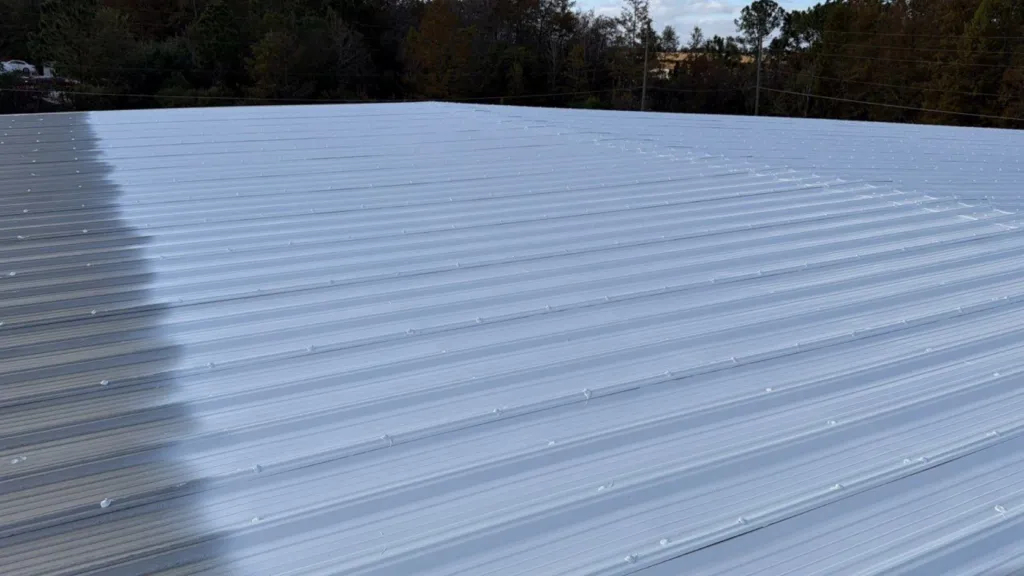
A white reflective coating lowers the temperature of the roof and the cooling load underneath it. According to the U.S. Department of Energy, a conventional dark roof can reach 150 degrees or more on a sunny summer afternoon, while a reflective roof surface under the same conditions can stay more than 50 degrees cooler. In a hot, sunny climate, that translates into lower air-conditioning demand during the months when it costs the most to run.
The actual savings are building-specific. They depend on how much insulation the building has, how it is used, the local climate, and how well the coating’s reflectivity holds up as it ages and collects dirt. Reflective coatings usually lose some reflectivity over time and benefit from periodic refresher coats to keep performing. For Florida buildings, where the cooling season runs most of the year, the payoff tends to be on the higher end. Our energy-efficient coatings are chosen with that reflectivity performance in mind.
Minimal disruption to your operations
A restoration keeps your building running. There is no tear-off, so there is no exposed roof deck, no heavy demolition, and far less noise, debris, and equipment on site than a full replacement involves. For an occupied building with tenants, employees, or customers inside, that is often the deciding factor. Silicone coating installs without the open flames or strong fumes that some roofing work produces, so business can usually continue underneath while the work happens above.
Why silicone is the coating we recommend for Florida roofs
Not all coatings behave the same in Florida’s climate, and the difference comes down to water. Florida roofs deal with heavy, often daily summer rain and low-slope roofs that drain slowly, which means standing water is a regular reality. Silicone holds up to ponding water and repeated wetting better than acrylic, which is more sensitive to moisture and standing water. In drier regions like the Southwest, acrylic is common and works well. In Florida, silicone is usually the better fit, which is why it is the coating we reach for most on commercial roofs in Orlando and across the state.
Coating restoration vs. full replacement
Here is how the two options compare for a roof that could go either way.
| Factor | Coating restoration | Full replacement |
| Cost | Roughly one-third the cost of replacement | Highest upfront cost |
| Disruption | Minimal, no tear-off, building stays occupied | Significant, tear-off and reconstruction |
| Roof life added | Years of added life, conditional on roof condition and maintenance, renewable with recoating | New full-term roof life |
| Warranty | 10, 15, or 20-year manufacturer warranties, plus the Manufacturer Lifetime Renewable Leak-Proof Warranty | 10, 15, or 20-year manufacturer warranties |
| Tax treatment | Often deductible in the year completed under Section 179 (confirm with your tax advisor) | Generally depreciated as a capital expense |
| Best for | Roofs that are aging but structurally sound, dry, and repairable | Roofs with wet insulation, failed decking, or too far gone to restore |
When a commercial roof coating is the wrong choice
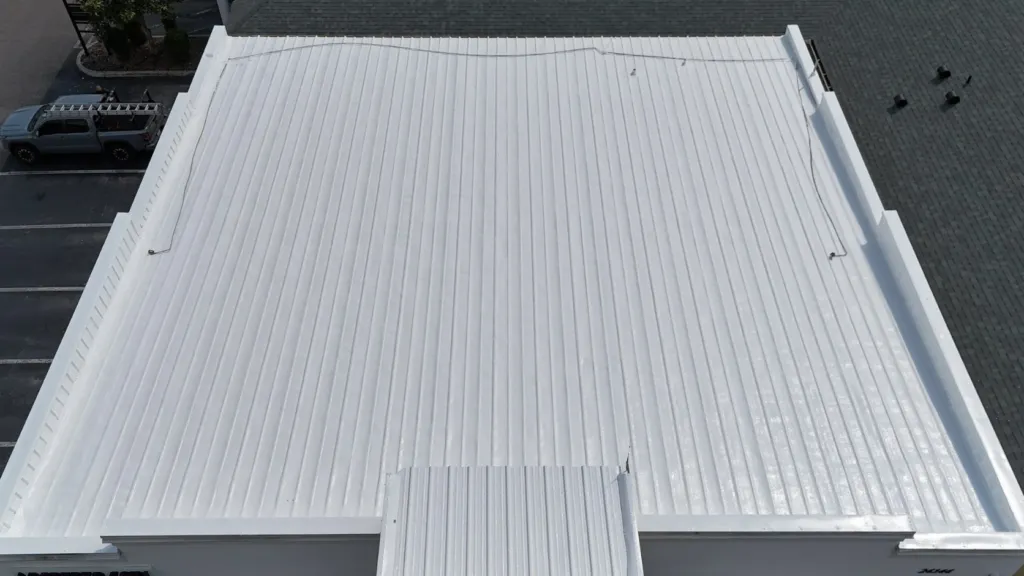
A coating is not a fix for a roof that has already failed. If the insulation is saturated, the deck is compromised, the attachment is loose across large areas, or the seams and details have deteriorated past the point of repair, coating over the problem only traps it. Building codes recognize the same limit. A roof recover is not allowed where the existing roof is water-soaked or is no longer an adequate base for additional roofing. On roofs like that, replacement is the more honest and, over time, the more economical answer.
This is where an honest inspection matters more than a sales pitch. We use thermal imaging and drone assessments to find trapped moisture that is not visible from the surface, so the recommendation is based on the roof’s real condition rather than a guess. If your roof is a strong candidate for restoration, we will tell you, and if it needs to come off, we will tell you that too, even when it costs us the larger job. A coating is only worth doing when the roof is right for it.
Get a free roof evaluation
The only way to know whether a coating restoration is right for your building is to have the roof evaluated. CES provides free, no-obligation roof evaluations, including on-site inspection and drone-assisted assessment, so you get a clear picture of your roof’s condition and your options before spending anything. If you own or manage commercial property in Florida and want a straight answer on whether to restore or replace, call us at (813) 419-1918 or request a free evaluation of your commercial roof coating options.